





What's Happening?
The Ohio Farm Bureau, in collaboration with Kroger’s Columbus Division, Nationwide, America 250-Ohio, Ohio State’s College of Food, Agricultural, and Environmental Sciences, and over 20 other partner organizations, organized a 'Feeding Our Neighbors'
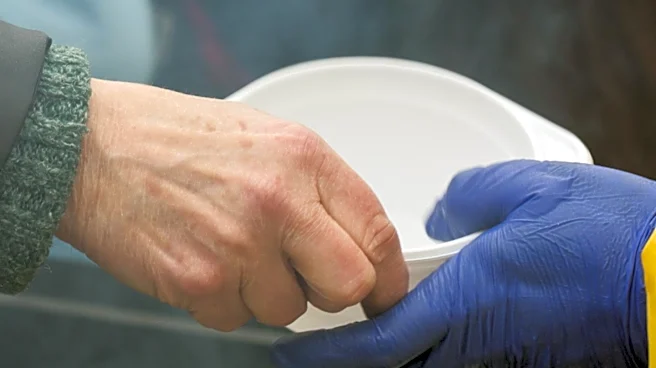
event. More than 300 volunteers participated in packing 10,000 meals for central Ohio families at The Ohio State University’s Multispecies Animal Learning Center. This event marked the beginning of Ohio Food and Farms Month, an October-long celebration designed to highlight the state's food and agriculture industry. Each meal package included ingredients for a chili bowl, a jar of peanut butter, and a recipe card. Ohio First Lady Fran DeWine and Lt. Gov. Jim Tressel also joined the volunteers. The packed meals are slated for distribution to various hunger-relief organizations across central Ohio, reinforcing the commitment of Ohio agriculture to food security both locally and globally.
Why It's Important?
This initiative underscores the critical role of Ohio's agricultural sector in ensuring food security and community well-being. By bringing together diverse stakeholders, including agricultural organizations, corporate partners, and academic institutions, the event demonstrates a collaborative approach to addressing hunger. The 'Feeding Our Neighbors' event not only provides immediate relief to families in need but also raises awareness about the broader contributions of the food and agriculture industry. It highlights the dedication of farmers and related businesses to providing a safe and abundant food supply, extending beyond the farmgate to community outreach. Such partnerships are vital for strengthening local economies, fostering community engagement, and promoting a deeper understanding of the agricultural heritage that underpins Ohio's identity. The involvement of prominent figures like Ohio First Lady Fran DeWine and Lt. Gov. Jim Tressel further amplifies the importance of these efforts, encouraging broader public participation and support for food security initiatives.
What's Next?
Following the meal-packing event, Ohio Food and Farms Month will continue throughout October, featuring various activities and initiatives designed to celebrate and educate the public about the state's agricultural industry. This month-long celebration, in collaboration with America 250-Ohio, aims to invite Ohioans to learn about their agricultural heritage and engage with local farms, festivals, and corn mazes. The packed meals will be distributed to hunger-relief organizations across central Ohio, directly impacting families facing food insecurity. The Ohio Farm Bureau will likely continue its mission of advocating for farmers and strengthening communities, potentially through further partnerships and events that highlight the importance of agriculture. The success of this kickoff event may also inspire similar collaborative efforts in the future, reinforcing the commitment to fighting food insecurity and promoting the agricultural sector's contributions.
Beyond the Headlines
The 'Feeding Our Neighbors' event and Ohio Food and Farms Month reflect a growing societal emphasis on local food systems and community resilience. In an era where supply chain vulnerabilities and food access disparities are increasingly apparent, initiatives that connect agricultural producers directly with community needs become profoundly significant. This effort goes beyond simply providing meals; it builds bridges between urban and rural populations, fostering a shared understanding of the challenges and triumphs within the food system. It also subtly promotes the idea of food as a communal resource and a cornerstone of social welfare, rather than merely a commodity. The collaboration between diverse entities—from a farm bureau to a major grocery chain and a university—exemplifies a multi-sector approach to complex social issues, suggesting a model for future community-based problem-solving that leverages collective strengths for greater impact. This could lead to more integrated strategies for food distribution, waste reduction, and nutritional education across the state.