

What's Happening?
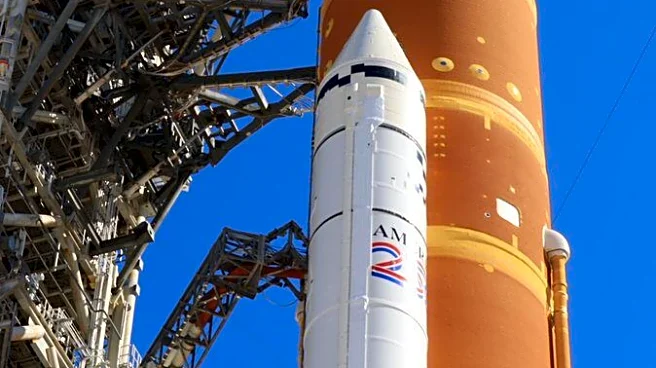
NASA has announced a delay in the Artemis 2 mission, originally scheduled for March, due to a helium flow issue in the Space Launch System (SLS) rocket's upper stage. The problem was detected during routine monitoring after a successful wet dress rehearsal,
which is a fueling test and simulated launch countdown. The helium is crucial for pressurizing the rocket's liquid hydrogen and oxygen tanks, necessary for propellant feeding to the engine. As a result, NASA will roll the SLS rocket and Orion spacecraft back to the Vehicle Assembly Building (VAB) for troubleshooting. This delay means the mission will miss its March 6-11 launch window, with the next opportunity being April 1-6. The Artemis 2 mission aims to be the first crewed lunar mission since Apollo 17, with a crew consisting of NASA astronauts Reid Wiseman, Victor Glover, Christina Koch, and Canadian Space Agency astronaut Jeremy Hansen.
Why It's Important?
The delay of the Artemis 2 mission is significant as it impacts NASA's timeline for returning humans to the Moon, a key objective of the Artemis program. The mission is a critical step in establishing a sustainable human presence on the Moon and preparing for future Mars missions. The helium flow issue highlights the technical challenges involved in space exploration, particularly with new systems like the SLS rocket. Delays can affect international partnerships, as the mission includes a Canadian astronaut, and can influence public and political support for NASA's lunar ambitions. The delay also underscores the importance of rigorous testing and monitoring in ensuring the safety and success of crewed space missions.
What's Next?
NASA plans to transport the SLS rocket back to the VAB for detailed troubleshooting and repairs. Engineers will investigate whether the helium issue is due to delivery lines, a valve, or a filter. The agency aims to resolve the problem in time for the next launch window in April. A media briefing is expected to provide further updates on the situation. The Artemis 2 crew has been released from quarantine and returned to Houston, awaiting further developments. The outcome of this delay will be closely watched by stakeholders, including international partners and the scientific community, as it could influence future mission schedules and planning.