What's Happening?
The Supreme Court has issued a significant ruling against President Trump's decision to federalize the National Guard in Illinois and activate troops across the state. This decision, which also impacts
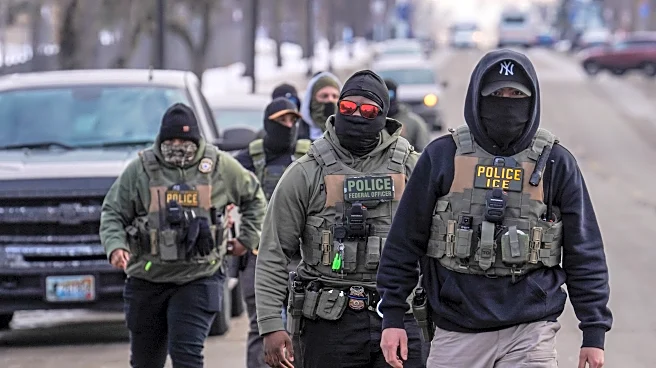
similar actions in Los Angeles and Portland, was deemed illegal by the court. The case revolved around the administration's deployment of troops to these cities, which Trump claimed was necessary due to local police inadequacies in protecting federal agents during protests. The Supreme Court interpreted two federal statutes, concluding that the President can only federalize a state's National Guard if the U.S. military is unable to execute federal laws. The ruling emphasized that the Posse Comitatus Act restricts the use of the military for domestic law enforcement, except in rare circumstances like insurrections.
Why It's Important?
This ruling is crucial as it reinforces the constitutional checks on presidential power, particularly concerning the use of military force within U.S. borders. By limiting the President's ability to federalize the National Guard, the Supreme Court has upheld the principle that the military should not be used for domestic law enforcement, a stance rooted in the Posse Comitatus Act. This decision protects civil liberties and prevents the expansion of executive authority, ensuring that state and local governments retain control over policing. The ruling serves as a critical check on the Trump administration's actions, which some viewed as an overreach of executive power.
What's Next?
The Supreme Court's decision sets a precedent that may influence future administrations' use of military force domestically. It is likely to prompt discussions among lawmakers and legal experts about the balance of power between federal and state authorities. The ruling may also lead to increased scrutiny of any future attempts by the executive branch to deploy military forces within the U.S. for law enforcement purposes. Stakeholders, including civil rights groups and state governments, may use this decision to challenge similar actions in the future, reinforcing the importance of maintaining a clear separation between military and civilian roles.