


What's Happening?
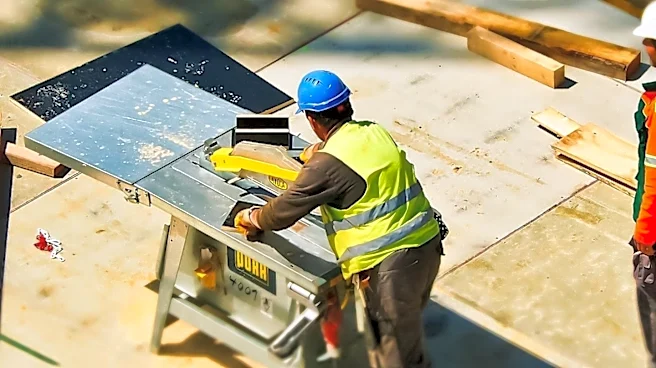
The United States is experiencing a significant and growing shortage of skilled trade workers, with an estimated talent gap of 1.3 million individuals. A new report from Lightcast, a labor market intelligence authority, defines 135 skilled trade occupations
and highlights that approximately 20 million U.S. jobs, or 9% of total employment, are in these trades. Employers face about 2.1 million skilled-trade job openings annually, with roughly three job openings for every person completing a relevant training program. Seven of the ten most in-demand skilled-trade occupations are already grappling with substantial labor shortages. Retirements account for approximately 40% of annual openings, and over a quarter of skilled-trade workers are aged 55 or older, indicating that demographic shifts are likely to exacerbate the talent deficit. This shortage affects various sectors, including construction, manufacturing, and the rapidly expanding data center industry, which alone has added 315,000 skilled-trade workers in the past five years.
Why It's Important?
This skilled labor shortage poses a significant threat to the U.S. economy and its critical infrastructure. Industries vital to national growth, such as manufacturing, construction, and aerospace and defense, rely heavily on these specialized workers. The deficit can lead to production backlogs, increased project costs, and delays in essential infrastructure development. For instance, the aerospace and defense sectors are already facing substantial production backlogs and skilled worker shortages, which are further complicated by material shortages and an increasing demand for data analysis skills. The lack of a clear, standardized definition for skilled trades has historically hindered efforts to address these gaps effectively. The new framework provided by Lightcast aims to offer a practical foundation for employers, educators, and policymakers to better understand and strengthen this crucial workforce, ensuring that essential services and economic growth are not hampered by a lack of qualified personnel.
What's Next?
To address the persistent skilled labor shortage, various strategies are being deployed and considered. Manufacturers in the aerospace and defense sectors are expanding apprenticeship programs, promoting internal mobility to flexibly deploy specialized talent, and implementing autonomous finishing systems to reduce reliance on manual labor for tasks with high turnover. These autonomous systems, particularly those utilizing Physical AI, can help capture process knowledge from retiring workers and shorten onboarding times for new operators. Broader efforts will likely focus on aligning training programs with regional demand, improving career awareness for skilled trades, and preparing for the impact of retirements. Policymakers and educational institutions are expected to use the new data and definitions to guide investments in workforce development, aiming to connect more workers with these high-paying jobs that often offer a 31% wage premium over other non-bachelor's degree occupations and pathways to management roles.
Beyond the Headlines
The skilled labor shortage highlights a deeper societal challenge regarding the valuation and promotion of vocational careers. Despite offering competitive wages and job security—with over 70% of skilled-trade occupations having low risk of automation—these professions often face a perception gap compared to four-year degree paths. The increasing demand, intensified by investments in infrastructure, manufacturing reshoring, and AI, underscores the indispensable nature of these hands-on roles. The reliance on autonomous systems and AI in some sectors, while addressing immediate labor gaps, also raises questions about the future evolution of skilled trades and the necessary adaptation of training programs to incorporate new technologies. Furthermore, the demographic pressures of an aging workforce suggest a need for proactive, long-term strategies to attract younger generations to these essential fields, ensuring the continuity of critical skills and the resilience of the U.S. economy.