





What's Happening?
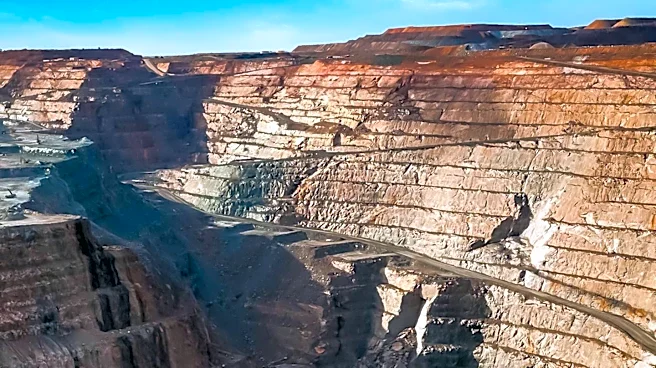
The Berkeley Pit, a 1,780-foot-deep former copper mine in Butte, Montana, experienced a significant rise in its acidic lake water level after its pumps were out of operation for seven months. The pumps were removed in January due to movement in the slope
beneath the only access road to the pump station. They were not restarted until August 31, during which time the lake's water level rose by approximately 3 feet. This rise brought the water in a nearby flooded mine, the Pilot Butte Mine, to less than 26 feet below the regulatory limit of 5,410 feet above sea level, a level that, if crossed, could lead to contaminated water flowing into Silver Bow Creek.
Why It's Important?
The incident at the Berkeley Pit highlights the ongoing environmental challenges associated with abandoned mining sites and the critical importance of continuous monitoring and management. The rise in the acidic lake's water level, and particularly the proximity of the Pilot Butte Mine's water to the regulatory limit, poses a significant environmental risk. If the contaminated water breaches this limit, it could lead to severe pollution of Silver Bow Creek, impacting local ecosystems and potentially public health. This situation underscores the long-term financial and environmental liabilities associated with Superfund sites and the need for robust, adaptive management strategies to prevent ecological disasters. The event also brings into focus the operational complexities and safety concerns involved in maintaining such sites, especially when geological instabilities arise.
What's Next?
Following the restart of the pumps on August 31, Montana Resources and Atlantic Richfield are now pumping approximately 6 million gallons of water per day, double the usual rate of 3 million gallons, to lower the lake level. The Horseshoe Bend treatment plant is capable of handling this increased volume. The Montana Bureau of Mines and Geology's next monthly report will be crucial in determining whether this intensified pumping effort has begun to reduce the lake's water level. Regulators and environmental agencies will closely monitor the water levels at the Berkeley Pit and surrounding compliance points, especially the Pilot Butte Mine, to ensure the 5,410-foot protective water level is not breached. Contingency plans may be necessary if the current pumping rates prove insufficient to manage the water level effectively.
Beyond the Headlines
The Berkeley Pit's situation is a stark reminder of the enduring legacy of industrial mining and the complex, often costly, environmental stewardship required for such sites. The challenge of managing a vast, highly acidic lake, coupled with geological instability, illustrates the intricate balance between industrial activity and environmental protection. This event could prompt a re-evaluation of long-term management strategies for Superfund sites across the U.S., emphasizing proactive measures and resilient infrastructure. It also raises questions about the financial responsibility of corporations for environmental remediation and the role of government oversight in ensuring public and ecological safety. The incident serves as a case study in the ongoing struggle to mitigate the environmental consequences of past industrial practices.