
What's Happening?
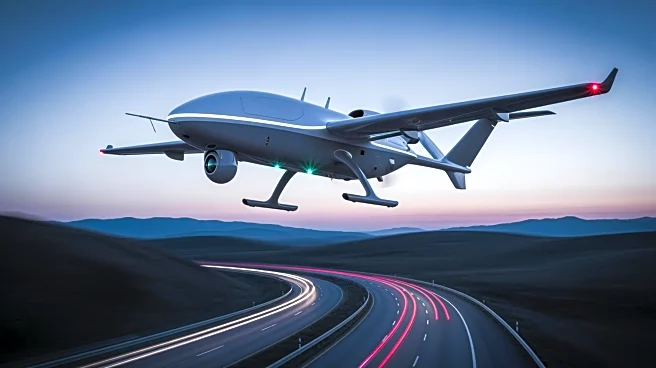
The Missouri State Highway Patrol is utilizing aircraft to enforce speed limits on highways. This method involves troopers in the air using a stopwatch to measure the time it takes for a vehicle to travel
between two pre-marked white blocks on the road, which are precisely measured to be one-eighth of a mile apart. The aircraft troopers then relay the vehicle's speed and description to ground units, who issue speeding tickets. This aerial enforcement strategy has been in use since the late 1950s and is employed in multiple counties across Missouri. Other states, including California, Colorado, Florida, Ohio, and Wisconsin, also use aircraft for speed enforcement, demonstrating the widespread adoption of this method.
Why It's Important?
The use of aircraft for speed enforcement represents a significant investment in traffic safety and law enforcement resources. By employing this method, states can cover larger areas and potentially catch more speed violators than traditional ground-based methods. This approach may lead to increased compliance with speed limits, thereby reducing accidents and enhancing road safety. However, it also raises questions about the cost-effectiveness and privacy implications of using aircraft for such purposes. The strategy could impact drivers' behavior, encouraging them to adhere more strictly to speed limits, knowing that enforcement is not limited to ground-based methods.
What's Next?
As more states adopt aerial speed enforcement, there may be increased scrutiny regarding the costs and benefits of this approach. Lawmakers and public policy experts might evaluate the effectiveness of aircraft in reducing traffic violations compared to other methods. Additionally, there could be discussions about expanding this strategy to more areas or integrating it with other technologies, such as automated speed cameras. Public response and feedback may influence future decisions on the use of aircraft for traffic enforcement.
Beyond the Headlines
The use of aircraft for speed enforcement could lead to broader discussions about privacy and surveillance. As technology advances, the balance between public safety and individual privacy rights may become a focal point in policy debates. Furthermore, the environmental impact of using aircraft for law enforcement purposes might be considered, prompting discussions on sustainable practices within police operations.