





What's Happening?
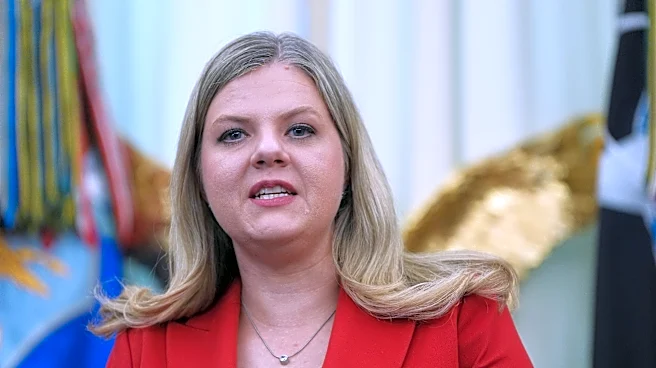
President Donald Trump is expected to nominate Dr. Heidi Overton as the new commissioner for the Food and Drug Administration (FDA), according to a senior administration official. Dr. Overton, a physician, currently serves as a White House domestic policy
official and frequently briefs President Trump on health-related matters. She was present earlier this month when President Trump announced an executive order aimed at reducing the number of universally recommended childhood vaccinations. If confirmed by the Senate, Dr. Overton would take the helm of the FDA during a critical period, particularly with recent concerns regarding the safety of the nation’s food supply following a multistate cyclospora outbreak. The official announcement regarding her nomination is anticipated to occur this week. Dr. Overton would succeed Dr. Marty Makary, who resigned in May due to disagreements with the White House on issues such as vaping policy and access to abortion pills. This nomination comes after two other individuals, former Rep. Brad Wenstrup and acting FDA Commissioner Kyle Diamantas, reportedly declined the position.
Why It's Important?
The nomination of Dr. Heidi Overton to lead the FDA carries significant implications for public health policy and regulatory oversight in the United States. The FDA is a crucial agency responsible for ensuring the safety and efficacy of drugs, vaccines, medical devices, and the nation's food supply. Dr. Overton's past involvement in advocating for reduced childhood vaccinations and her criticism of certain public health recommendations suggest a potential shift in the agency's approach to these areas. Her previous role at the America First Policy Institute, where she celebrated the overturning of Roe v. Wade and criticized late-term abortion, indicates a conservative stance that could influence FDA decisions on reproductive health, particularly concerning abortion pills like mifepristone. The agency is currently reviewing the safety of mifepristone, and a new commissioner with strong views on abortion could impact the outcome and future accessibility of such medications. Furthermore, her emphasis on states adopting 'gold-standard' vaccine recommendations, which some doctors dispute, could lead to increased debate and potential changes in state-level vaccination requirements, affecting public health outcomes and parental choices nationwide.
What's Next?
Following the anticipated official announcement, Dr. Heidi Overton's nomination will proceed to the Senate for confirmation. This process is likely to involve rigorous hearings where senators will scrutinize her qualifications, past statements, and policy positions, particularly concerning vaccinations, reproductive health, and food safety. Given her conservative background and previous clashes with established medical recommendations, her confirmation process could be contentious. If confirmed, Dr. Overton will immediately face challenges such as addressing the ongoing concerns about the nation's food supply, continuing the safety review of mifepristone, and navigating the Trump administration's efforts to modify national vaccine policies. Her leadership will determine the FDA's direction on these critical issues, potentially leading to new regulations or changes in existing guidelines. Stakeholders, including pharmaceutical companies, public health organizations, and consumer advocacy groups, will closely monitor her actions and decisions, which could have far-reaching effects on healthcare access, public health initiatives, and the regulatory landscape for various industries.
Beyond the Headlines
Dr. Heidi Overton's potential appointment to lead the FDA extends beyond immediate policy changes, touching upon deeper ethical and scientific debates within public health. Her past statements questioning universally recommended childhood vaccinations and her advocacy for states to adopt different guidelines could exacerbate the ongoing public discourse around vaccine hesitancy and the role of scientific consensus in public health policy. This could lead to a further politicization of health decisions, potentially eroding public trust in federal health agencies if the FDA's scientific independence is perceived to be compromised. Furthermore, her strong stance on abortion could reignite legal and ethical battles over access to reproductive healthcare, particularly regarding medication abortion, which has become a focal point in post-Roe v. Wade America. The long-term implications could include a re-evaluation of the FDA's role in balancing scientific evidence with political and social values, potentially setting precedents for how future administrations approach regulatory bodies responsible for public welfare. This appointment could also highlight the increasing tension between federal health mandates and states' rights in determining health policies.