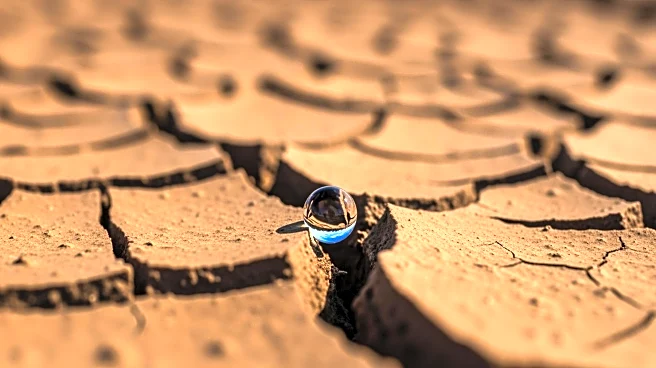




What's Happening?
The United Nations has declared a 'global water bankruptcy,' indicating that the term 'water crisis' no longer adequately describes the severe state of the world's water resources. This declaration highlights the irreversible losses of natural water sources,
deforestation, pollution, and global warming as key contributors to this dire situation. The UN report emphasizes that 50% of the world's largest lakes have lost water since the early 1990s, and 75% of the global population lives in water-insecure regions. The report calls for world leaders to adopt science-backed solutions and to elevate water issues in climate negotiations. AccuWeather's climate study supports these findings, noting a decline in annual rainfall in the contiguous U.S. and an increase in extreme rainfall events, which could lead to more frequent wildfires and reduced crop production.
Why It's Important?
The UN's declaration of global water bankruptcy underscores the urgent need for a paradigm shift in how water resources are managed and protected. This situation poses significant risks to global food security, economic stability, and public health. In the U.S., the potential for more frequent wildfires and reduced agricultural output could have severe economic implications, affecting food prices and availability. The report's call for a long-term, sustainable approach to water management highlights the necessity for international cooperation and innovative solutions to address these challenges. Failure to act could exacerbate existing inequalities and lead to geopolitical tensions over water resources.
What's Next?
The UN report urges immediate action from world leaders to integrate water security into global frameworks and climate negotiations. This includes monitoring water bankruptcy and promoting successful water management practices. The report suggests that highlighting and replicating successful efforts could create a more solution-oriented narrative, encouraging policymakers to take decisive action. As the situation evolves, it will be crucial for governments, businesses, and civil society to collaborate on developing and implementing effective water management strategies.