



What's Happening?
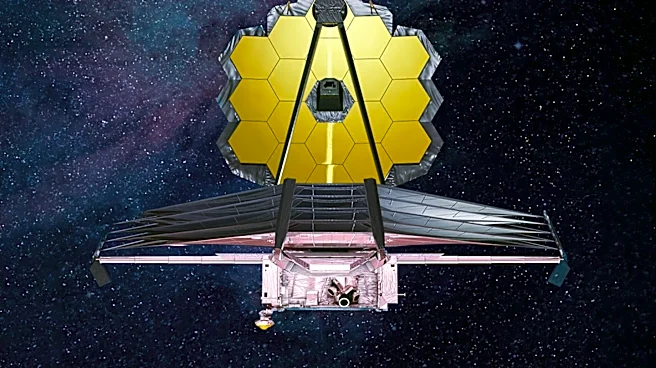
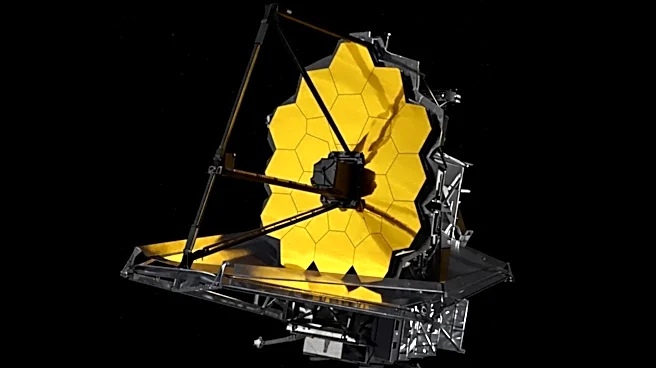
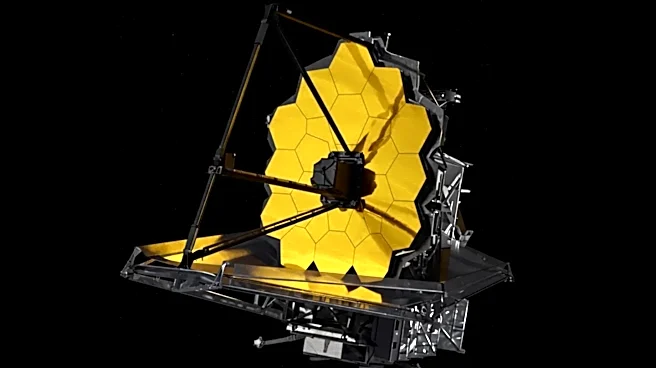
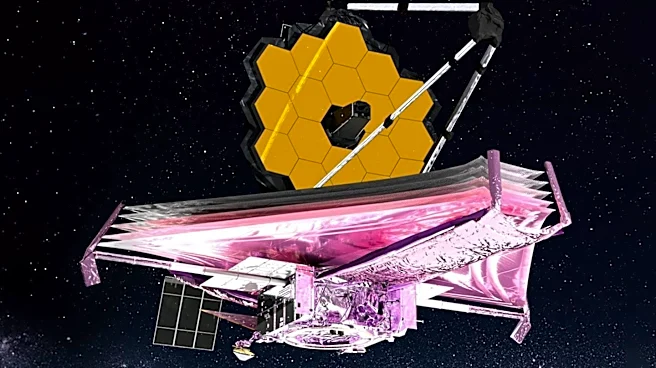
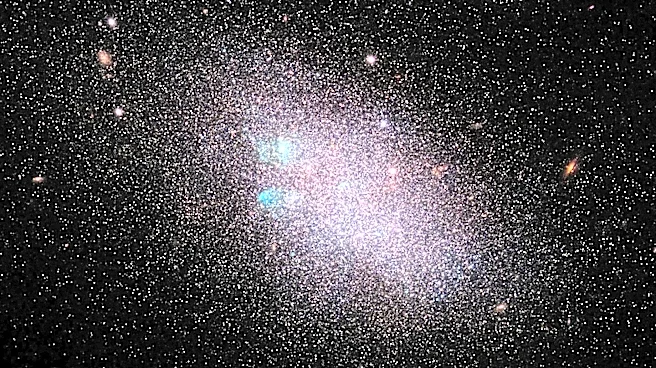
The James Webb Space Telescope (JWST) has captured an image of a young galaxy cluster, MACS J0553.4-3342, which is 4.4 billion years old. The image, taken with the telescope's near-infrared camera, shows a massive cluster of galaxies still forming. This
observation provides a glimpse into the past, showcasing the early stages of galaxy cluster formation and offering insights into the universe's history.
Why It's Important?
The ability of the JWST to look back in time and capture images of ancient cosmic structures is a testament to its advanced capabilities. This observation not only enhances our understanding of galaxy formation but also demonstrates the telescope's potential to uncover new information about the universe's evolution. The JWST's ability to detect faint light from distant galaxies extends the boundaries of astronomical research, opening new avenues for discovery.
Beyond the Headlines
The JWST's observations highlight the interconnectedness of time and space, as the light from these distant galaxies has traveled billions of years to reach us. This capability to peer into the past offers a unique perspective on the universe's history and evolution, providing valuable data for scientists studying cosmic phenomena. The telescope's findings could lead to new theories and models about the formation and development of galaxies.