



What's Happening?
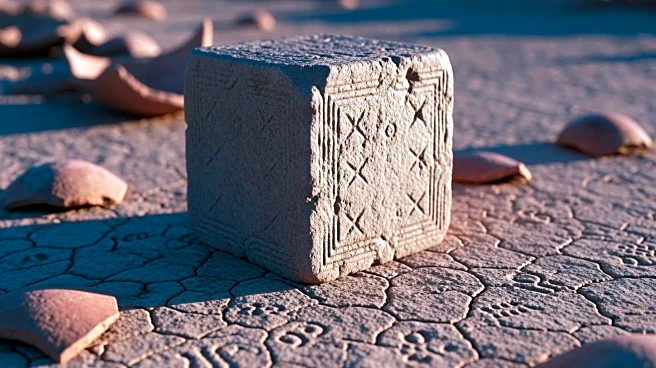
Archaeologists in Mexico have uncovered a 1,400-year-old skull with a unique cube shape at Balcón de Montezuma in Tamaulipas. This discovery is notable because the cranial modification style is unlike any previously found in the region. The skull belonged
to a middle-aged man from a village that thrived around A.D. 400. While cranial modification was common, this particular shape, described as a parallelepiped, is unprecedented in the area. Typically, skulls in the region were modified to point upward, but this one was flattened across the top. Chemical analysis confirmed that the man was a local, suggesting the modification was a cultural practice rather than a result of travel. The shape may indicate cultural identity, social rank, or group affiliation, hinting at a cultural exchange or influence not previously recognized.
Why It's Important?
This discovery sheds light on the cultural dynamics of ancient Mesoamerican societies, suggesting that the community in Tamaulipas was more culturally interconnected than previously thought. The unique skull shape could indicate a blending of traditions or influences from other regions, challenging existing assumptions about the cultural isolation of the area. This finding could lead to a reevaluation of the cultural and social interactions among pre-Hispanic groups in Mesoamerica, providing new insights into their societal structures and exchanges.