
What's Happening?
The United Nations' International Maritime Organization (IMO) has initiated emergency talks to address the escalating shipping crisis in the Middle East, particularly around the Strait of Hormuz. The meeting, held at the IMO's London headquarters, aims
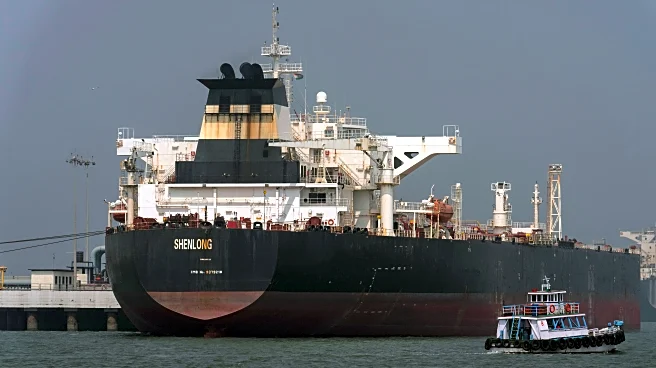
to discuss measures to protect trade ships affected by the ongoing conflict in the region. The crisis has left approximately 20,000 seafarers stranded on around 3,200 vessels. The IMO's 40-member council is considering resolutions to establish a safe maritime corridor for the evacuation of these seafarers and ships. The situation has been exacerbated by Iran's alleged blockade of the Strait of Hormuz, a critical passage for global crude and liquefied natural gas, which has led to a spike in oil prices and market instability. Gulf states have condemned Iran's actions as unlawful, while Iran blames the maritime security deterioration on attacks by Israel and the US.
Why It's Important?
The crisis in the Strait of Hormuz has significant implications for global trade and energy markets. The strait is a vital chokepoint through which a substantial portion of the world's oil supply passes. Disruptions in this area can lead to increased oil prices, affecting economies worldwide. The situation also highlights the vulnerability of international shipping to geopolitical tensions, which can have cascading effects on global supply chains. The IMO's efforts to establish a safe corridor are crucial for ensuring the safety of seafarers and maintaining the flow of goods. The outcome of these talks could set a precedent for international cooperation in maritime security and crisis management.
What's Next?
The IMO council is expected to vote on proposed resolutions, although these would be non-binding. The international community, including countries like Britain, France, and Germany, is urging the IMO to adopt a declaration condemning Iran's actions. Meanwhile, maritime industry bodies are calling for a coordinated international approach to security, emphasizing the need to consider seafarer welfare. The situation remains fluid, and the response from major stakeholders, including potential diplomatic or military actions, will be closely watched. The effectiveness of the IMO's measures and the international community's response will be critical in resolving the crisis.