

What's Happening?
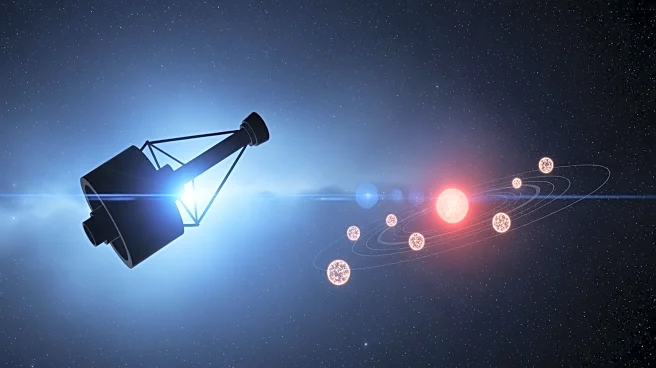
NASA's James Webb Space Telescope is providing new insights into the TRAPPIST-1 system, which consists of seven Earth-sized rocky planets orbiting a red dwarf star. The system, located 40 light-years away, is a focal point for studying exoplanet atmospheres.
The Webb telescope's advanced capabilities allow for detailed atmospheric analysis, which is crucial for understanding the potential habitability of these planets. The study is complicated by the star's intense activity, which can interfere with atmospheric signals. Ongoing observations aim to determine if these planets can retain atmospheres, a key factor in assessing their habitability.
Why It's Important?
The TRAPPIST-1 system offers a unique opportunity to study Earth-sized exoplanets in detail, potentially advancing our understanding of planetary atmospheres and habitability. The findings could have significant implications for the search for life beyond Earth, as they help scientists understand the conditions necessary for life to exist. The research also contributes to broader exoplanet studies, informing future missions and the development of new technologies for space exploration.
What's Next?
Future observations with the James Webb Space Telescope and other upcoming telescopes, like the European Southern Observatory's Extremely Large Telescope, will continue to explore the TRAPPIST-1 system. These efforts aim to refine our understanding of the planets' atmospheres and assess their potential for supporting life. The ongoing research will also inform the design of future missions targeting similar exoplanetary systems.