



What's Happening?
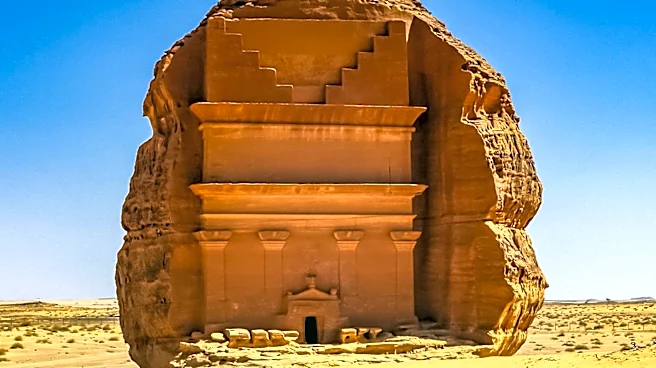
The King Salman bin Abdulaziz Royal Reserve is home to thousands of archaeological inscriptions and ancient rock carvings, including Thamudic and Nabataean inscriptions. These carvings depict wildlife and hunting scenes, portraying daily life in ancient times.
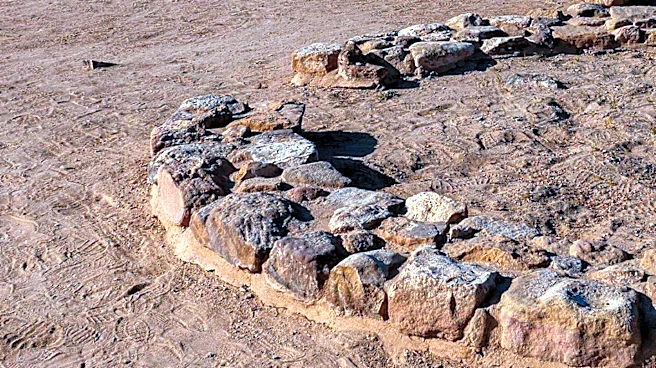
The reserve is considered one of the oldest sites of human settlement in the Arabian Peninsula, with some remains dating back to 8,000 BC. It contains significant archaeological and historical sites, such as the UNESCO-listed Jubbah, which includes the Jabal Umm Sinman oasis and ancient rock inscriptions. The reserve spans Northern Borders, Hail, Al-Jouf, and Tabuk regions, featuring 14 distinct geographical formations.
Why It's Important?
The archaeological inscriptions at the King Salman Royal Reserve serve as living historical records, providing insights into the lives of ancient civilizations. The reserve's cultural heritage is integral to its value and conservation efforts, highlighting the importance of preserving historical sites. This aligns with Saudi Arabia's Vision 2030 goals of promoting cultural heritage and tourism. By preserving these sites, Saudi Arabia aims to attract global visitors and scholars, enhancing understanding of ancient civilizations and contributing to economic diversification.