







What's Happening?
The University of North Dakota (UND) Police Department has implemented a campus-wide security system using Verkada cameras, which Chief Rodney Clark states has significantly aided in solving crimes and student misconduct investigations over the past year.
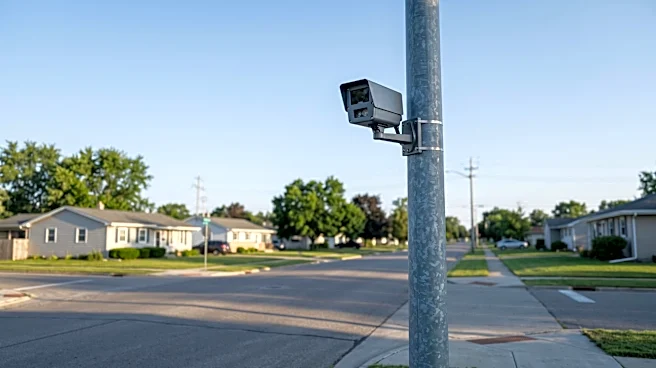
The system, costing approximately $1.8 million, includes three cameras equipped with license plate reader technology. These cameras are strategically placed in public spaces across the campus. Chief Clark clarified that the UND Police Department does not use Flock cameras, a brand that has recently faced national scrutiny due to alleged misuse by law enforcement. The Verkada system stores data in a cloud-based system, and this data is only shared with other agencies as part of a police investigation, not as a common occurrence. While the cameras have audio capabilities, the UND Police Department has configured them to record only video. The data is retained for 30 days unless an investigation requires longer preservation. The system also incorporates AI technology to assist in identifying individuals, such as a person of interest wearing a specific color shirt, but final identification is always confirmed by officers through human observation.
Why It's Important?
The deployment of advanced camera systems like Verkada by university police departments highlights a growing trend in leveraging technology for campus safety and security. This initiative aims to enhance the efficiency of law enforcement in addressing criminal activities and maintaining order within university grounds. The distinction made by Chief Clark regarding the use of Verkada over the controversial Flock cameras is significant, as it reflects an awareness of public concerns regarding privacy and potential misuse of surveillance technology. By opting for a different vendor and specifying data handling protocols, the UND Police Department is attempting to balance security needs with privacy considerations. The use of AI for initial identification, followed by human verification, indicates an evolving approach to policing that integrates technological capabilities while retaining human oversight. This model could influence other educational institutions in their adoption and implementation of similar security measures, potentially setting a precedent for how such technologies are vetted, deployed, and managed to address both security and ethical concerns.
What's Next?
The UND Police Department will likely continue to monitor the effectiveness and public perception of its Verkada camera system. Ongoing discussions and evaluations, such as those held at the University Senate meeting, will be crucial for addressing any emerging concerns regarding data privacy, system capabilities, and operational transparency. The department may also explore further technological advancements in campus security, while maintaining its commitment to human verification for AI-assisted identifications. Other universities and law enforcement agencies might observe UND's experience with the Verkada system as they consider their own surveillance technology investments, potentially leading to broader adoption of similar systems or the development of best practices for their use. The emphasis on not using controversial brands like Flock suggests a future trend where institutions will be more selective about their technology partners, prioritizing those with transparent data policies and fewer public controversies.
Beyond the Headlines
The implementation of AI-powered surveillance systems on university campuses raises deeper questions about the balance between security and civil liberties. While these systems offer enhanced capabilities for crime prevention and investigation, they also introduce concerns about pervasive monitoring and the potential for algorithmic bias. The UND Police Department's approach of using AI for initial identification but relying on human officers for final verification attempts to mitigate some of these concerns, emphasizing human accountability in law enforcement decisions. However, the mere presence of such technology can alter the campus environment, potentially impacting students' and faculty's sense of privacy and freedom. The debate over which surveillance technologies are acceptable and how their data is managed will likely intensify, pushing institutions to develop comprehensive policies that address not only the technical aspects but also the ethical and societal implications of their use. This case serves as a microcosm for the broader societal challenge of integrating advanced surveillance into public spaces while upholding democratic values and individual rights.