

What's Happening?
The United States Department of the Treasury's Office of Foreign Assets Control (OFAC) has issued General License 51, which permits U.S. individuals and companies to engage in transactions with Venezuela's state mining company, Minerven, concerning Venezuelan-origin
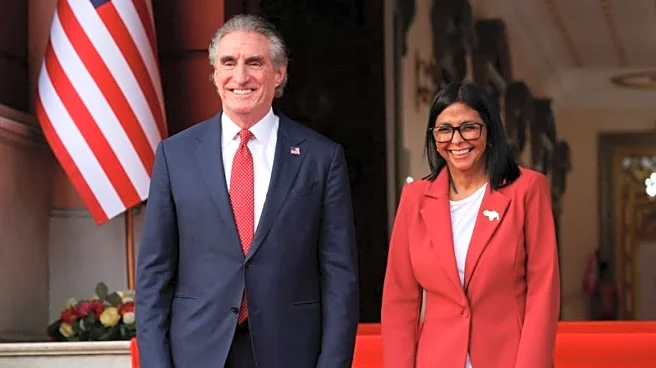
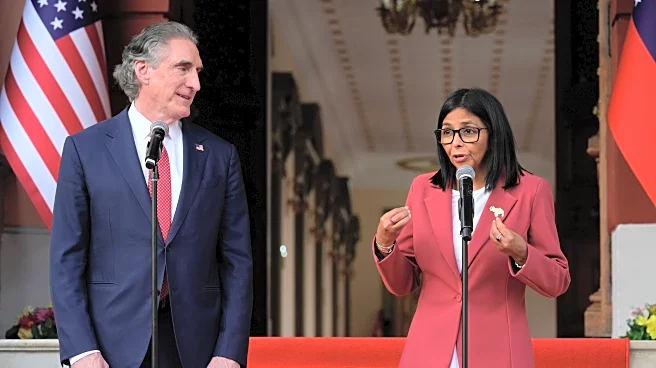
gold. This license allows for the export, sale, supply, storage, purchase, delivery, and transportation of Venezuelan-origin gold to the U.S., its refining within the U.S., and subsequent resale or export by U.S. entities. Despite this new license, the broader unilateral coercive measures imposed by the U.S. against Venezuela remain in effect. This development follows recent dialogues between the U.S. and Venezuela, where both nations agreed to restore diplomatic and consular relations, aiming for a constructive dialogue based on mutual respect and shared benefits.
Why It's Important?
The issuance of General License 51 by OFAC is significant as it marks a potential shift in U.S.-Venezuela relations, particularly in the economic domain. By allowing transactions in Venezuelan-origin gold, the U.S. is opening a channel for economic engagement that could benefit both countries. For Venezuela, this could mean an influx of foreign currency and investment, which is crucial given its economic challenges. For U.S. businesses, it presents new opportunities in the gold sector, potentially boosting the U.S. economy. However, the continuation of broader sanctions indicates that while there is a move towards economic engagement, political tensions and restrictions remain.
What's Next?
The next steps could involve further negotiations between the U.S. and Venezuela to expand economic cooperation while addressing political differences. Stakeholders, including U.S. businesses and Venezuelan authorities, may seek to capitalize on this license to enhance trade relations. Observers will be watching for any additional licenses or easing of sanctions that could further open economic ties. The restoration of diplomatic relations suggests a potential for broader dialogue, which could lead to more comprehensive agreements in the future.
Beyond the Headlines
This development could have deeper implications for international relations and economic policies. The U.S.'s decision to issue this license might be seen as a strategic move to influence Venezuela's economic policies and align them more closely with international norms. It also raises questions about the effectiveness of sanctions as a tool for political leverage. The move could encourage other countries to reconsider their economic relations with Venezuela, potentially leading to a shift in the geopolitical landscape in Latin America.