

What's Happening?
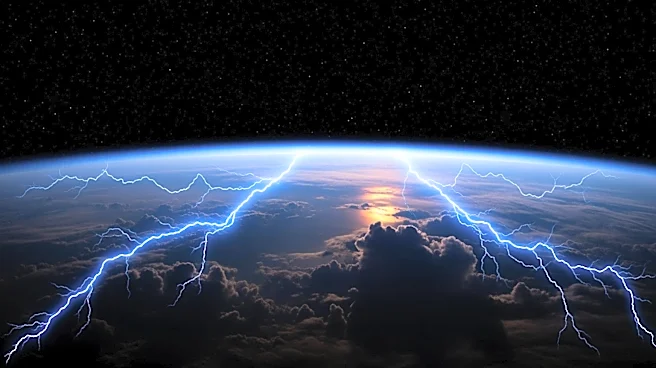
Astronauts aboard the International Space Station (ISS) have captured images of rare atmospheric phenomena known as transient luminous events (TLEs), which include red sprites, blue jets, and ELVES. These events occur in the upper atmosphere and are typically
invisible from the ground. The ISS, equipped with specialized cameras and sensors, provides an ideal vantage point for observing these phenomena. The European Space Agency's Atmosphere–Space Interactions Monitor (ASIM) has been instrumental in capturing these events, offering insights into their impact on the ionosphere and potential disruptions to radio communications. The data collected helps scientists understand the electrical processes in thunderstorms and their effects on the atmosphere.
Why It's Important?
The study of TLEs is crucial for understanding the complex interactions between thunderstorms and the upper atmosphere. These phenomena can affect radio transmissions and aircraft safety, making it important to understand their occurrence and impact. The data collected by the ISS and ASIM contributes to models that predict the behavior of these events, which can inform aviation guidelines and improve safety measures. Additionally, understanding TLEs can enhance climate models by providing insights into atmospheric chemistry and radiative balance, which are important for predicting future climate changes.
What's Next?
With the ISS expected to operate for several more years, ongoing observations of TLEs will continue to expand our understanding of these phenomena. Future missions may include more advanced detectors and CubeSats to provide real-time alerts and detailed mapping of TLE occurrences. This research will contribute to improved weather forecasting and safety protocols for aviation and communication systems. As scientists gather more data, they will refine models of atmospheric electrical activity, potentially leading to new discoveries about the Earth's weather and climate systems.