






What's Happening?
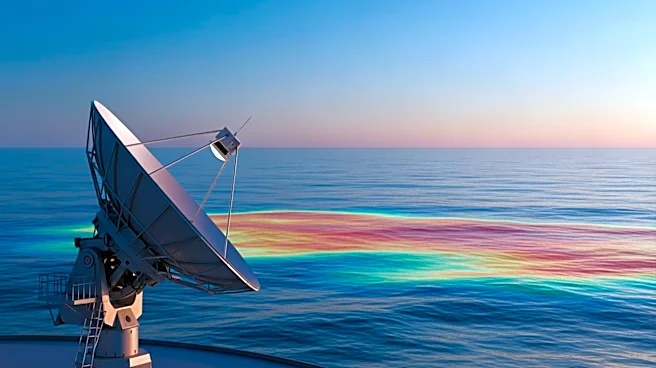
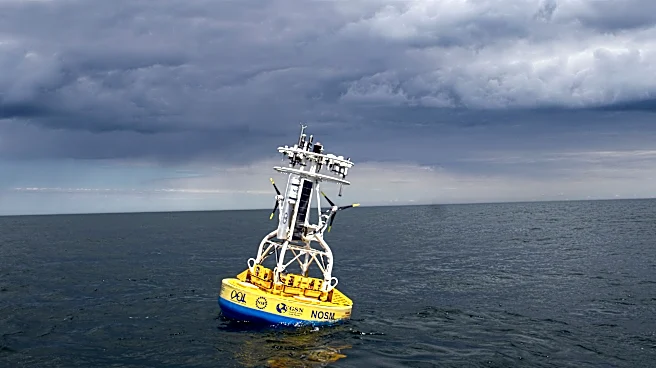
Researchers from Florida State University have developed a new modeling framework that significantly improves the precision of satellite measurements of ocean surfaces. This advancement addresses the challenge posed by internal tides, which are subsurface
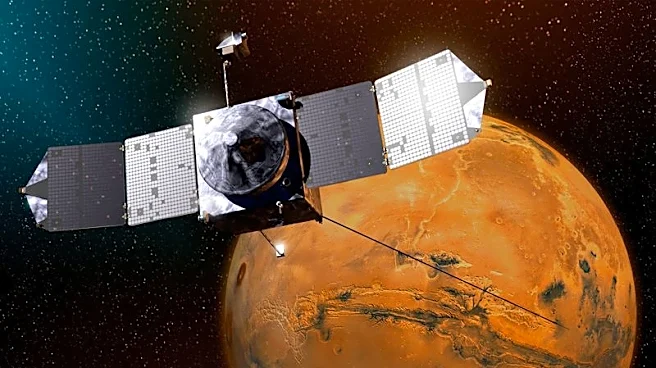
waves that interfere with satellite data. By using the Hybrid Coordinate Ocean Model (HYCOM), the team has managed to correct these interferences, enhancing the accuracy of NASA's Surface Water and Ocean Topography (SWOT) satellite. This breakthrough allows for a clearer understanding of fine-scale ocean circulation, which is crucial for climate science as it affects how oceans absorb atmospheric heat and carbon dioxide.
Why It's Important?
The improved precision in satellite data has significant implications for climate science and related fields. Fine-scale ocean circulation plays a critical role in moderating Earth's climate by influencing the ocean's ability to absorb heat and carbon dioxide. Enhanced data accuracy will allow scientists to refine climate models and improve predictions of ocean-atmosphere interactions. This advancement also benefits operational forecasting in weather prediction, marine navigation, and coastal infrastructure planning, where understanding ocean currents and wave dynamics is essential. The collaboration between oceanographers and remote sensing specialists exemplifies the potential of interdisciplinary research to address complex environmental challenges.
What's Next?
The integration of real-time ocean modeling with continuous satellite monitoring is expected to usher in a new era for Earth system science. This approach will enhance the ability to monitor and predict climate change impacts, optimize shipping routes, and manage fisheries more effectively. The improved data accuracy will also support efforts to safeguard ocean health and inform adaptive strategies for communities reliant on marine environments. As the ocean continues to play a vital role in regulating global climate, understanding its dynamics becomes increasingly important for developing sustainable solutions.
Beyond the Headlines
This research highlights the value of interdisciplinary collaboration in advancing scientific understanding. By combining physical oceanography with advanced data assimilation techniques and satellite technology, the team has overcome previous limitations in remote ocean observation. This approach demonstrates how multi-institutional and international cooperation can expand scientific horizons and provide insights that are crucial for addressing global environmental challenges. The successful correction of internal tide interference marks a significant step forward in unveiling the ocean's hidden dynamics from space.