






What's Happening?
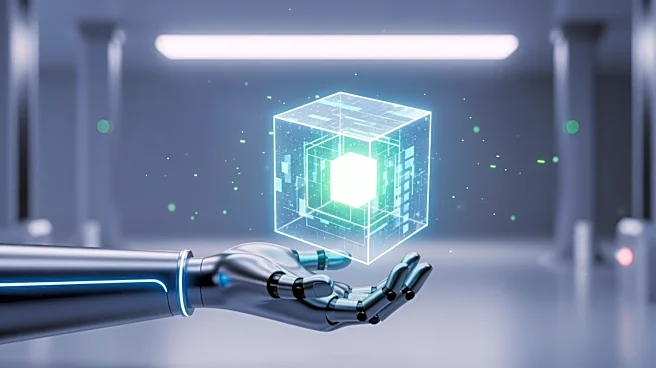
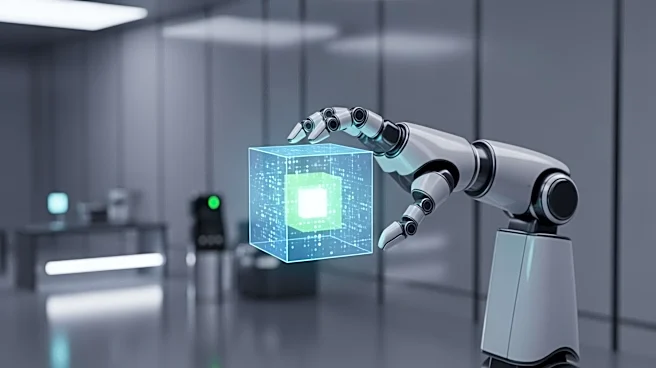
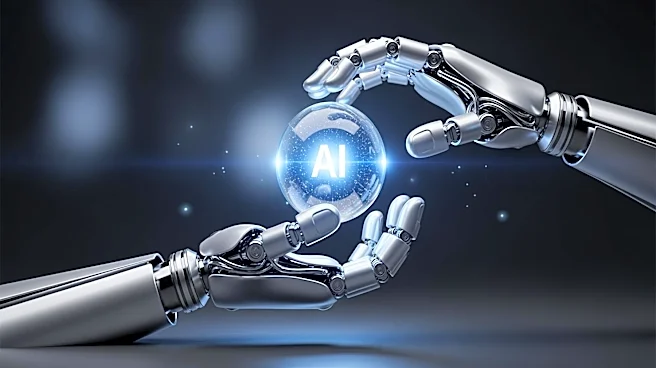
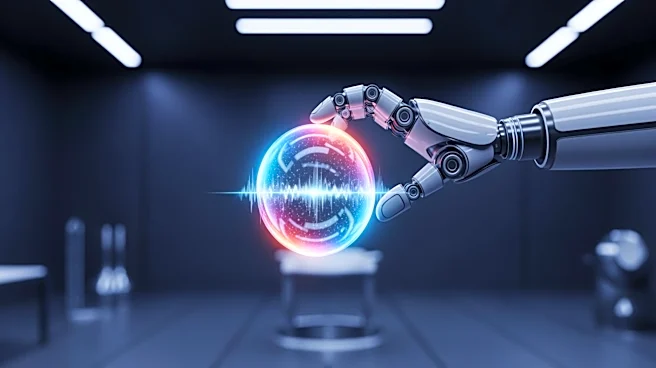
A new development in robotics has been achieved with the introduction of an AI brain that grants robots human-like hand dexterity. This advancement allows robots to perform complex tasks such as pouring from a pitcher, cracking an egg, and even playing
the piano. The AI, known as GENE-26.5, represents a significant leap in robotic capabilities, enabling machines to handle tasks that were previously impossible. This breakthrough is part of a broader trend in robotics where AI is increasingly used to enhance physical manipulation capabilities, making robots more versatile and efficient in various applications.
Why It's Important?
The enhancement of robotic dexterity through AI has profound implications for industries reliant on automation. This development could revolutionize sectors such as manufacturing, food service, and healthcare by enabling robots to perform intricate tasks with precision and reliability. The ability to automate complex manual tasks could lead to increased productivity and efficiency, reducing labor costs and minimizing human error. Additionally, this technology could open new possibilities in fields like elder care and rehabilitation, where delicate handling is crucial. As robots become more capable, they could take on roles that are currently labor-intensive or hazardous for humans.
What's Next?
As AI-driven dexterity in robots becomes more refined, we can expect increased integration of these machines into everyday tasks and industries. Companies may begin to adopt this technology to streamline operations and reduce reliance on human labor for repetitive or dangerous tasks. Regulatory bodies might also need to establish new guidelines to ensure the safe deployment of such advanced robotics in public and private sectors. Furthermore, ongoing research and development will likely focus on enhancing the AI's learning capabilities, allowing robots to adapt to new tasks and environments more efficiently.