



What's Happening?
Aid deliveries into Gaza are significantly below the levels agreed upon in the U.S.-brokered ceasefire between Israel and Hamas. According to an analysis by the Associated Press, only an average of 459 trucks per day have entered Gaza, compared to the 600
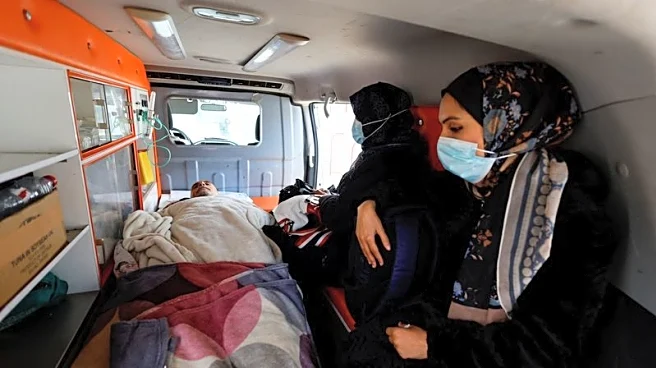
trucks per day stipulated by the ceasefire agreement. The Israeli military body COGAT reported that 18,000 trucks of food aid have entered Gaza since the ceasefire, which is only 70% of the total aid expected. The United Nations and other humanitarian groups have reported even lower figures, with the UN stating that only 6,545 trucks have been offloaded at Gaza crossings. The shortage of aid has led to severe humanitarian consequences, with food scarcity affecting the displaced population, and reports of malnourished babies being born to starving mothers.
Why It's Important?
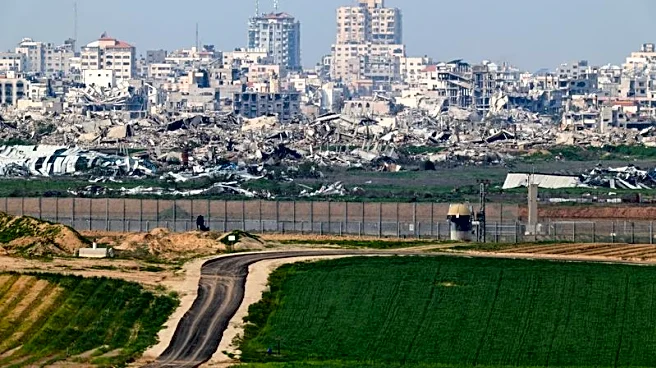
The shortfall in aid deliveries to Gaza has significant humanitarian implications, exacerbating the already dire conditions faced by the territory's 2 million residents. The lack of sufficient aid has led to food scarcity and inadequate shelter for displaced families, particularly as winter conditions worsen. This situation highlights the challenges in implementing ceasefire agreements and the impact of political and logistical barriers on humanitarian efforts. The ongoing restrictions and bottlenecks in aid delivery could further destabilize the region and prolong the suffering of the civilian population. The international community's response and pressure on involved parties to adhere to the ceasefire terms are crucial in addressing these humanitarian needs.
What's Next?
The continuation of aid restrictions and the slow pace of deliveries may lead to increased international pressure on Israel and Hamas to comply with the ceasefire terms. Humanitarian organizations are likely to intensify their calls for more aid and better access to the affected areas. The situation may also prompt diplomatic interventions to ensure that the ceasefire agreement is fully implemented. Additionally, the ongoing humanitarian crisis could influence future negotiations and peace efforts in the region, as stakeholders seek to address the root causes of the conflict and improve living conditions for Gaza's residents.