
What's Happening?
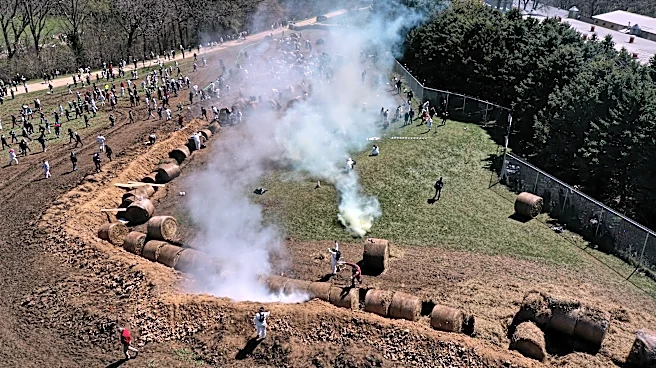
In Wisconsin, approximately 1,000 activists attempted to storm the Ridglan Farms beagle breeding and research facility in Blue Mounds, leading to a confrontation with law enforcement. The protest, organized
by the Coalition to Save the Ridglan Dogs, aimed to rescue beagles from the facility. Police responded with rubber bullets and pepper spray to disperse the crowd, arresting the group's leader and several others. This marks the second attempt by protesters to enter the facility, following a previous incident in March where 30 dogs were taken. The protestors' actions included overcoming barricades and attempting to breach the facility's defenses, but they were ultimately unsuccessful in seizing any animals. The facility, which houses around 2,000 beagles, has been under scrutiny for alleged animal mistreatment, although it denies any wrongdoing.
Why It's Important?
The protest highlights ongoing tensions between animal rights activists and research facilities, raising questions about animal welfare and ethical treatment in scientific research. The use of force by police underscores the challenges law enforcement faces in managing large-scale protests, particularly those involving direct action tactics. The incident also draws attention to the broader debate over the use of animals in research, which has significant implications for scientific practices and regulatory policies. The facility's decision to relinquish its breeding license by July 1, as part of a deal to avoid prosecution, suggests potential changes in how such facilities operate and are regulated.
What's Next?
The aftermath of the protest may lead to increased scrutiny of animal research facilities and potentially stricter regulations. Activists are likely to continue their efforts to raise awareness and push for legislative changes regarding animal welfare. The legal proceedings against those arrested could also set precedents for how similar protests are handled in the future. Additionally, the facility's upcoming cessation of its breeding operations may impact the availability of animals for research, prompting discussions on alternative methods.