








What's Happening?
The Democratic Republic of the Congo is grappling with a severe Ebola outbreak, with the death toll reaching 600 and confirmed cases rising to 1,759. The outbreak, which began in May 2026, has spread to multiple provinces, including Tshopo and Haut-Uele.
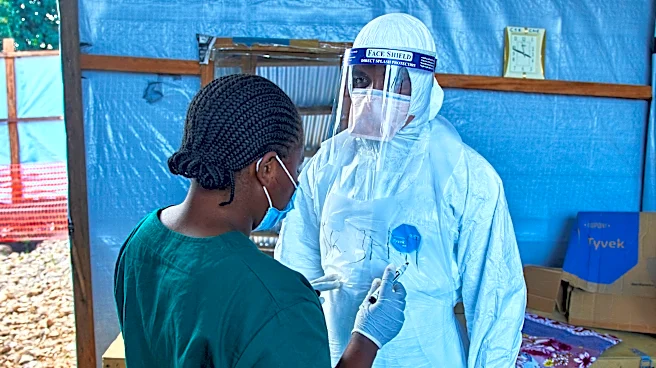
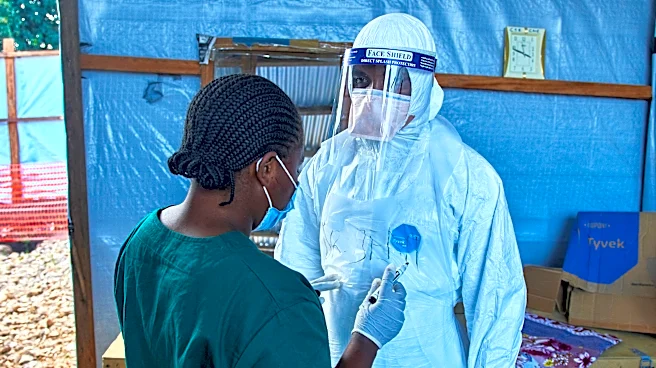
Healthcare workers in the Ituri province, the epicenter of the outbreak, are threatening to strike due to delayed payments and inadequate working conditions. Some workers have already stopped working, demanding wages and bonuses that have been unpaid since the outbreak's declaration. The Bundibugyo strain of Ebola, responsible for this outbreak, is less deadly than other strains, but there is no approved vaccine.
Why It's Important?
The strike by healthcare workers in the DRC highlights the critical challenges faced by frontline responders in managing the Ebola outbreak. Delayed payments and inadequate resources not only demoralize healthcare workers but also jeopardize the effectiveness of the response efforts. The situation underscores the importance of timely and adequate support for healthcare workers, who are essential in controlling the spread of the virus. The outbreak's impact extends beyond public health, affecting the socio-economic stability of the region. The international community's response, including financial and logistical support, is crucial in addressing both the immediate and long-term needs of the affected areas.