







What's Happening?
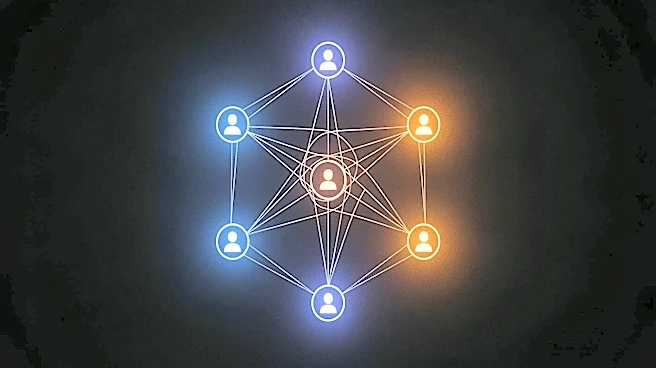
A study published in Physical Review X confirms the 'six degrees of separation' theory, suggesting that people are typically connected by six or fewer social connections. This concept, popularized by a 1967 experiment by Stanley Milgram, has been supported
by modern research on social networks like Facebook and email. The study, involving researchers from multiple countries, explains that individuals form connections to improve their social standing, balancing influence with the effort required to maintain relationships. This behavior results in networks where the average separation is about six steps, a pattern observed across various systems.
Why It's Important?
The confirmation of the six degrees of separation theory has significant implications for understanding human social behavior and network dynamics. It highlights the interconnectedness of global populations, facilitating the rapid spread of information, trends, and ideas. This interconnectedness also poses challenges, such as the swift transmission of diseases, as seen during the COVID-19 pandemic. Understanding these network dynamics can inform strategies for managing information dissemination and controlling disease outbreaks. Additionally, the study underscores the importance of strategic social connections in enhancing individual influence and access to information.