


What's Happening?
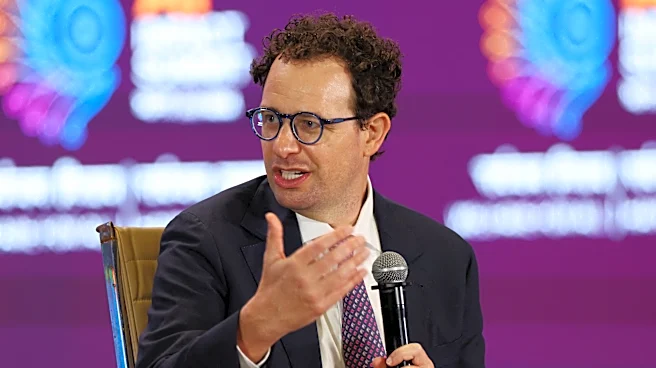
U.S. politicians are actively working to establish positions on artificial intelligence (AI) as the technology rapidly advances and public concern grows. Representative Jake Auchincloss, who notably delivered the first AI-written floor speech three years
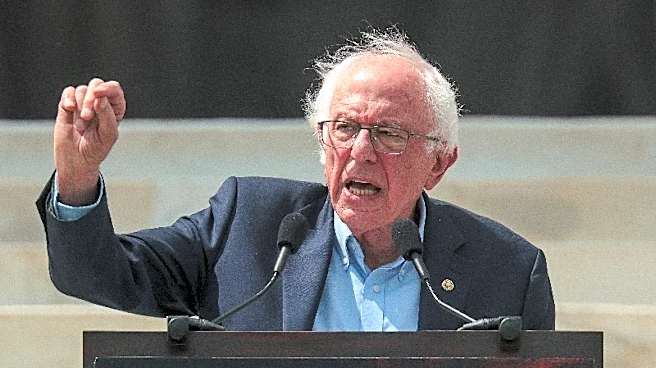
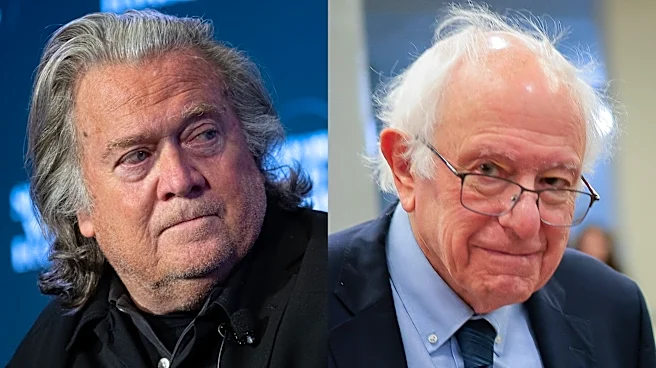
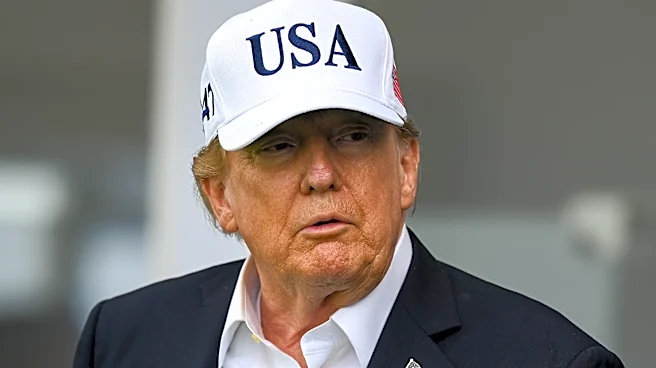
ago, highlights the fluidity of public opinion on AI. Both Democratic and Republican parties are beginning to form their stances, though traditional party lines are not as clear-cut as usual. Democrats are generally advocating for stricter government regulation and raising concerns about the environmental impact of data centers, while some Republicans favor a free-market approach and express worries about the U.S. falling behind China in the technological race. Despite various proposals, including a bill co-authored by Representative Lori Trahan for AI safety requirements, there is currently little momentum for federal action this year. President Trump has expressed a pro-AI stance, supporting development with few restrictions and dismissing fears as a 'hoax,' while Senator Bernie Sanders and Steve Bannon, despite their political differences, have voiced skepticism about unchecked AI corporate power at the 'Pro-Human Assembly' conference.
Why It's Important?
The ongoing debate and lack of consensus in Congress regarding AI policy are critical for the future of technology regulation and its societal impact in the U.S. The divergent approaches from political parties, ranging from calls for stringent regulation to advocating for free-market development, underscore the complexity of governing a rapidly evolving field. This policy vacuum could lead to either a reactive regulatory environment or an unbridled expansion of AI with unforeseen consequences. Public opinion, which is increasingly skeptical of AI's impact and the ability of leaders to manage it, will likely influence the political landscape, especially with upcoming elections. The significant financial lobbying by tech companies further complicates the legislative process, potentially swaying policy decisions and raising questions about corporate influence versus public interest. The U.S.'s approach to AI regulation will also have international implications, affecting its competitiveness and leadership in global technology development.
What's Next?
With limited legislative work days remaining before November, significant federal action on AI policy this year appears unlikely. Politicians will continue to gauge voter sentiment and refine their positions, particularly as they look towards midterm elections and beyond. The lack of consensus suggests that any future AI legislation will require broad bipartisan support to pass. Stakeholders, including tech companies, civil society groups, and political leaders, will likely intensify their efforts to influence the policy direction. The ongoing public discourse, fueled by alarming headlines and increasing skepticism, will continue to shape the political narrative around AI. The differing views, even among unexpected allies like Senator Sanders and Steve Bannon, indicate a growing recognition of AI's profound implications, which could eventually force more decisive legislative action, even if it is not immediate.
Beyond the Headlines
The struggle to define AI policy in the U.S. reveals deeper societal and ethical considerations beyond immediate regulation. The debate touches upon fundamental questions of technological control, economic competitiveness, and the balance between innovation and public safety. The 'bizarro world' alliances, such as those seen at the 'Pro-Human Assembly' where progressive and populist figures converge on AI skepticism, highlight a growing unease across the political spectrum about the power of large tech corporations and the potential for AI to disrupt society. This cross-ideological concern suggests that AI is not merely a technical issue but a profound challenge to existing social and economic structures. The long-term implications include potential shifts in labor markets, privacy concerns, and the very definition of human agency, making the current policy-setting phase a critical juncture for the nation's future trajectory.