






What's Happening?
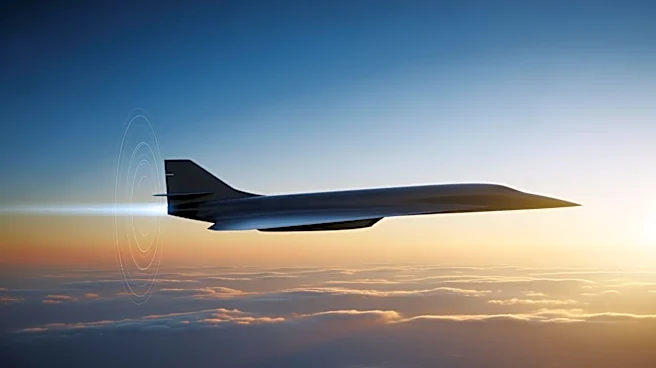
NASA's X-59 jet, part of the agency's Quiet Supersonic Technology (Quesst) program, has successfully achieved supersonic flight for the first time. The flight took place on June 5, 2026, at Edwards Air Force Base in California, with NASA test pilot Jim
'Clue' Less at the controls. The X-59 reached a maximum altitude of 43,400 feet and a top speed of 713 mph, which is about Mach 1.1. This milestone is significant as the X-59 is designed to produce a quieter sonic boom, described as a 'mild thump,' which could lead to the return of supersonic commercial flights over land. The aircraft, built by Lockheed Martin Skunk Works, has been actively testing and accumulating flight hours since its first flight in October 2025.
Why It's Important?
The successful supersonic flight of the X-59 represents a major step forward in aerospace innovation, particularly in the development of quieter supersonic travel. This technology could revolutionize air travel by reducing the noise pollution associated with sonic booms, which led to the ban on supersonic flights over land in 1973. If NASA's Quesst program continues to progress, it could lead to new noise standards and the reintroduction of supersonic commercial flights, significantly reducing travel times. This advancement holds potential economic benefits for the aviation industry and could position the U.S. as a leader in next-generation aerospace technology.
What's Next?
Following this milestone, the X-59 team plans to conduct further test flights under 'mission conditions,' aiming for higher speeds and altitudes. These tests will gather data on how communities perceive the quieter sonic booms, which will be shared with U.S. and international regulators. The goal is to establish new noise standards that could enable a viable market for supersonic commercial flights. Continued collaboration between NASA and Lockheed Martin Skunk Works is expected as they work towards expanding NASA's X-plane portfolio.