








What's Happening?
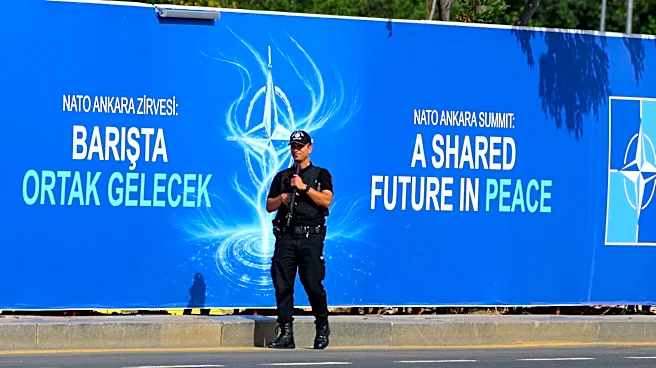
NATO has confirmed the selection of Saab's GlobalEye aircraft to replace part of its aging Boeing E-3 fleet, marking a significant step in modernizing its airborne surveillance and early warning capabilities. Announced at the NATO Summit in Ankara, the decision
involves negotiations with Saab for up to 10 GlobalEye aircraft. The system offers advanced multi-domain surveillance, enhancing detection and tracking of threats such as drone swarms and missiles. The acquisition is a collaborative effort among 11 NATO member nations, including Belgium, Canada, and Germany. Saab's CEO, Micael Johansson, expressed confidence in GlobalEye's ability to meet NATO's needs, highlighting its adaptability and operational advantages.
Why It's Important?
This acquisition is crucial for NATO's strategic defense, as it replaces outdated surveillance technology with a more advanced system capable of addressing modern threats. The GlobalEye's capabilities will significantly enhance NATO's situational awareness, providing a comprehensive surveillance solution across multiple domains. The decision also reflects a broader trend of strengthening transatlantic industrial cooperation, with European and Canadian industries playing a leading role. This move is expected to improve NATO's defense posture, ensuring member nations are better equipped to respond to evolving security challenges. The investment in GlobalEye underscores NATO's commitment to maintaining a robust and adaptable defense infrastructure.
What's Next?
Saab will proceed with formal negotiations to secure a contract with NATO, with the first aircraft expected to be operational by 2030. The production process will involve significant collaboration with European and Canadian industries, ensuring a seamless integration of the new system into NATO's defense framework. As the transition from the E-3 fleet progresses, member nations will likely focus on optimizing the deployment and operational use of the GlobalEye system. This development is expected to be a key component of NATO's ongoing efforts to enhance its defense capabilities and maintain strategic superiority.