



What's Happening?
A Swedish study published in JAMA Network Open has found that higher meat consumption may be linked to a lower risk of dementia in individuals with certain genetic predispositions to Alzheimer's disease. The research, conducted by Karolinska Institutet,
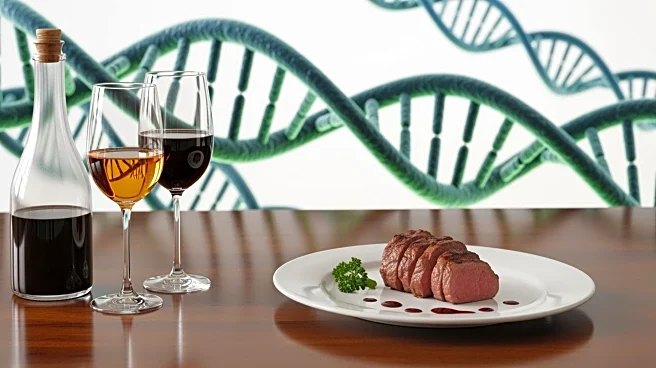
focused on participants with the APOE 3/4 and 4/4 genotypes, which are associated with a higher risk of Alzheimer's. The study tracked over 2,100 older adults for up to 15 years, analyzing the relationship between diet and cognitive health. Results indicated that those with higher meat intake had a reduced risk of cognitive decline and dementia, particularly when consuming less processed meat.
Why It's Important?
This study challenges conventional dietary advice and suggests that personalized nutrition based on genetic profiles could play a role in dementia prevention. The findings offer hope for individuals with genetic risk factors, indicating that lifestyle changes, such as diet modification, may mitigate their risk. As dementia and Alzheimer's disease continue to pose significant public health challenges, understanding the role of diet in cognitive health could lead to more effective prevention strategies. The research also highlights the need for further studies to explore the causal relationship between meat consumption and cognitive health.
What's Next?
The study's authors call for clinical trials to develop dietary recommendations tailored to individuals' genetic profiles. Such research could provide more definitive evidence on the impact of meat consumption on dementia risk and inform public health guidelines. Additionally, exploring the effects of different types of meat and other dietary factors on cognitive health could lead to more comprehensive dietary strategies for dementia prevention. As the prevalence of Alzheimer's disease increases, personalized nutrition may become a key component of public health efforts to address this growing concern.