




What's Happening?
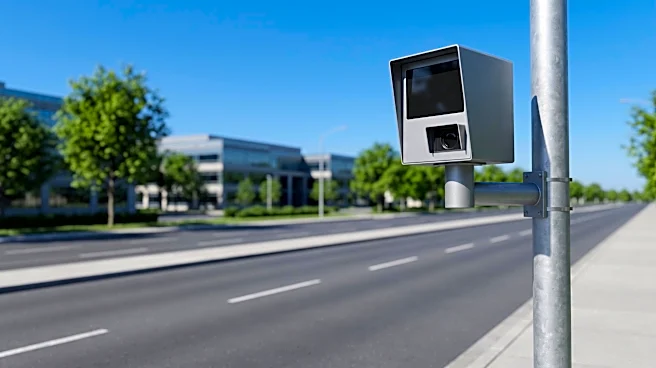
The city of Bellevue has installed speed cameras in four locations identified as having a higher risk of collisions. These cameras were introduced in mid-August as part of a pilot program, during which drivers exceeding the posted speed limit by 8 mph
or more received warnings. However, this grace period is concluding, and the city will soon begin issuing speed tickets. This initiative is a component of Bellevue’s Vision Zero program, which aims to eliminate traffic deaths and serious injuries on city streets by 2030. Speeding in a school zone will incur a fine of $248, while other locations will result in a $124 penalty. Three additional cameras are slated for installation later this year.
Why It's Important?
The implementation of speed cameras in Bellevue marks a significant step in the city's efforts to enhance road safety and reduce traffic-related fatalities and injuries. The Vision Zero initiative reflects a growing national trend among cities to adopt proactive, data-driven strategies to improve urban mobility and public health. By targeting high-risk areas, these cameras are intended to deter speeding, which is a major contributing factor to severe accidents. The financial penalties associated with violations are designed to serve as a strong disincentive, encouraging drivers to adhere to speed limits. This measure could lead to a reduction in emergency response calls, lower healthcare costs associated with accident injuries, and ultimately, safer streets for pedestrians, cyclists, and motorists alike. It also highlights a shift towards automated enforcement as a tool for traffic management.
What's Next?
With the grace period ending, Bellevue residents and commuters can expect to receive citations for speeding violations detected by the new cameras. The city will likely monitor the effectiveness of these cameras in reducing speeding incidents and collisions in the designated areas. Data collected from the pilot program and subsequent enforcement will be crucial in evaluating the success of this phase of the Vision Zero initiative. The planned installation of three more cameras later this year indicates a potential expansion of the program, suggesting that if successful, automated enforcement could become a more widespread tool in Bellevue's traffic safety strategy. Public reaction to the ticketing phase will also be a key factor, potentially influencing future policy adjustments or community engagement efforts.
Beyond the Headlines
The deployment of speed cameras in Bellevue raises broader discussions about privacy, civil liberties, and the role of technology in urban governance. While proponents emphasize the cameras' potential to save lives and improve public safety, critics often voice concerns about surveillance, the potential for disproportionate impact on certain communities, and the revenue-generating aspect of fines. The ethical implications of automated enforcement, including the potential for errors and the lack of human discretion, are also frequently debated. Furthermore, the success of Vision Zero initiatives often depends not just on enforcement but also on comprehensive urban planning, infrastructure improvements, and public education campaigns. The long-term impact of these cameras will extend beyond accident statistics, influencing public perception of law enforcement, urban planning, and the balance between safety and individual freedoms in a technologically advanced society.