






What's Happening?
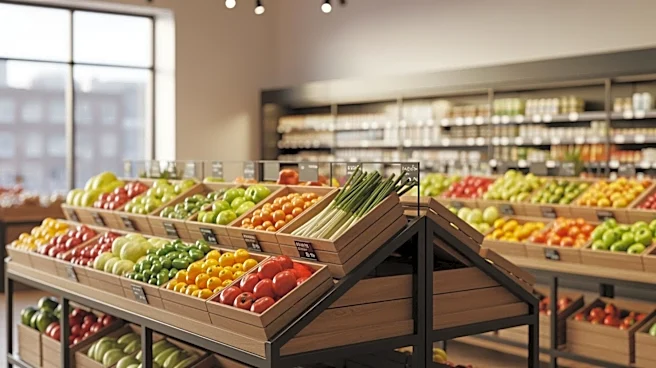
New York City Mayor Zohran Mamdani has announced plans to open the city's first city-owned grocery store in East Harlem. This initiative is part of a broader effort to establish five such stores across the city's boroughs by 2029. The first store will
be located at La Marqueta, a city-owned marketplace, and aims to provide affordable, fresh, and healthy food to residents. The project is expected to cost around $30 million, with funding redirected from existing subsidies to private supermarkets. Mamdani's plan is designed to address rising food prices and food deserts, offering a public option for groceries. The initiative has received support from figures like Senator Bernie Sanders, who praised it as a necessary step towards affordability and accessibility in food shopping.
Why It's Important?
The introduction of city-owned grocery stores in New York City represents a significant shift in how urban food deserts and affordability issues are addressed. By providing a public option for groceries, the initiative could challenge private grocery chains and potentially lower food prices. This move is particularly important in neighborhoods with limited access to full-service supermarkets, where residents often face higher prices and fewer healthy food options. The plan also highlights a broader trend towards government intervention in markets traditionally dominated by private enterprises, aiming to ensure that essential services are accessible to all citizens. If successful, this model could inspire similar initiatives in other cities facing similar challenges.
What's Next?
Mayor Mamdani plans to open the first city-owned grocery store next year, with the goal of establishing one in each borough by the end of his term in 2029. The initiative will likely face scrutiny and opposition from private grocery chains concerned about increased competition. However, the plan's success could lead to further government-led initiatives aimed at improving affordability and access to essential services. Additionally, the project may prompt discussions on the role of government in providing public options in other sectors, such as healthcare and housing.
Beyond the Headlines
The establishment of city-owned grocery stores raises questions about the balance between public and private sector roles in providing essential services. It challenges the notion that government cannot compete with private enterprises, potentially setting a precedent for future public options in other areas. The initiative also touches on broader themes of economic inequality and the responsibility of government to ensure equitable access to resources. As the project unfolds, it may influence public policy debates on how best to address systemic issues like food insecurity and economic disparity.