




What's Happening?
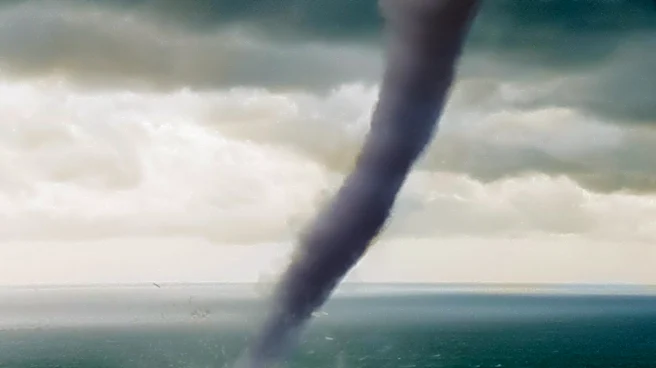
A waterspout recently formed in the sea off the coast of Eynesil district in Giresun, Turkey. The phenomenon occurred around 4:30 PM during sunny weather, drawing water several meters upwards from the sea. Eyewitnesses reported brief panic as the waterspout moved
towards the shore. However, it lost intensity and dissipated before making landfall, ultimately causing no damage to the coastal area or its inhabitants. This event was observed by many, with some capturing images of the waterspout as it developed and moved.
Why It's Important?
While this specific waterspout dissipated without causing harm, such meteorological events highlight the dynamic nature of coastal weather patterns. Waterspouts, though often less intense than land-based tornadoes, can pose risks to maritime activities, small boats, and coastal communities if they reach shore. Their occurrence can disrupt local fishing operations, recreational boating, and potentially impact coastal infrastructure if they intensify or make landfall. Understanding and monitoring these phenomena are crucial for coastal safety and preparedness, especially in regions prone to such weather occurrences. The brief panic among observers underscores the need for public awareness regarding waterspouts and appropriate safety protocols.
What's Next?
Local authorities and meteorological services will likely continue to monitor weather conditions in the Black Sea region, particularly for the formation of similar phenomena. Public advisories may be issued to inform residents and maritime operators about the potential for waterspouts during specific weather patterns. Further research into the conditions that lead to waterspout formation in this area could also be undertaken to improve forecasting and early warning systems. For the immediate future, residents are advised to remain vigilant and follow local weather updates.
Beyond the Headlines
The occurrence of waterspouts, even those that dissipate harmlessly, contributes to a broader understanding of atmospheric and oceanic interactions. These events are a natural part of the Earth's weather systems, but their frequency and intensity can be influenced by larger climate patterns. Public perception of such events, often fueled by dramatic imagery, can range from awe to fear, influencing how communities prepare for and react to natural phenomena. The incident also serves as a reminder of the constant interplay between human activity and the natural environment in coastal zones.