
What's Happening?
The Brooks Mine, located in Nay Aug Park, Scranton, Pennsylvania, has reopened for educational tours after nearly 50 years of closure. Originally opened in 1902 as an educational facility, the mine was
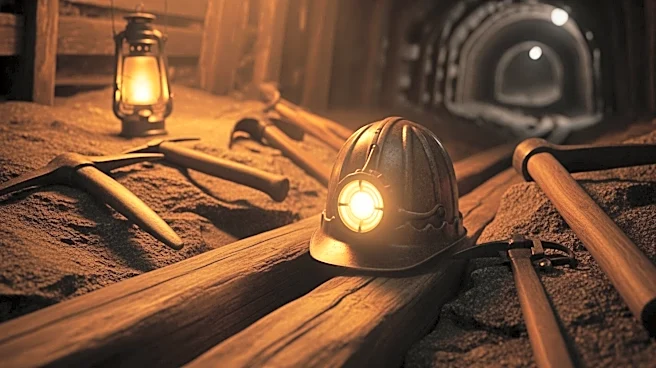
used to train new miners and host tours for the public. It closed in 1975 due to safety concerns, primarily the lack of a second emergency exit. After extensive planning and improvements, including the addition of a second exit, the mine reopened in 2023. Unlike other coal mines in the area, Brooks Mine was never an active mining site; it was designed for educational purposes, and no coal was commercially extracted. The tours, which are free and last about 30 minutes, provide visitors with insights into the anthracite coal mining industry, showcasing coal seams and mining tools. The mine also features fossils embedded in its walls, dating back hundreds of millions of years. The site is not handicap accessible, but it is suitable for those who can manage a short walk on uneven terrain.
Why It's Important?
The reopening of Brooks Mine as an educational site is significant for preserving and promoting the history of coal mining in northeastern Pennsylvania. It offers a unique opportunity for visitors to learn about the region's industrial heritage and the role of coal mining in shaping local communities. The mine's educational focus helps raise awareness about the historical and geological aspects of coal mining, which is crucial for understanding the economic and social development of the area. Additionally, the mine's reopening contributes to local tourism, attracting visitors to Scranton and supporting nearby attractions and businesses. This initiative not only preserves a piece of history but also stimulates economic activity in the region.
What's Next?
Future plans for Brooks Mine include expanding the mine car tracks and potentially introducing a mine car ride for visitors. This development aims to enhance the educational experience and attract more tourists. The mine's management is also considering further improvements to make the site more accessible and engaging for a broader audience. As the mine continues to operate, it is expected to collaborate with local historical societies and educational institutions to offer more comprehensive programs and events. These efforts will likely increase the mine's visibility and importance as a cultural and educational landmark in Pennsylvania.