
What's Happening?
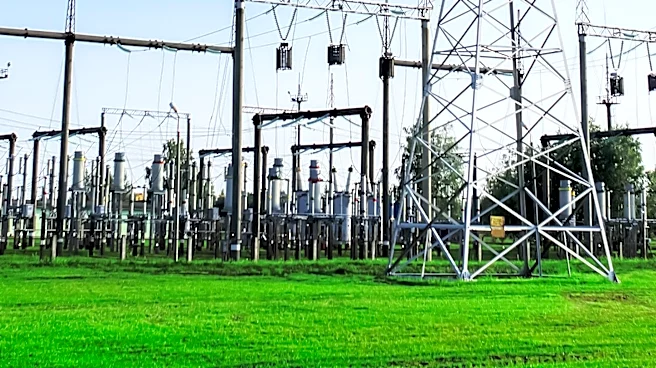
South African President Cyril Ramaphosa is in a dispute with Eskom, the state energy company, over the pace of opening the national power grid to private operators. The government aims to transfer powerline assets to an independent Eskom spinoff to dismantle
the utility's monopoly, allowing private power generation companies to sell electricity directly to buyers. Eskom's board chair, Mteto Nyati, has urged a delay in transferring $6 billion in physical assets, warning that this could breach existing loan contracts and allow lenders to demand repayment. The presidency is negotiating safeguards with bondholders, arguing that delays could undermine investor confidence in energy reform. South Africa's energy reforms have attracted significant private capital, helping Eskom end rolling power cuts that have hindered economic growth.
Why It's Important?
The dispute between President Ramaphosa and Eskom is significant as it highlights the challenges of implementing energy reforms in South Africa. The reforms are crucial for attracting private investment and ensuring a stable power supply, which is vital for economic growth. However, the potential breach of loan contracts and the risk of losing investor confidence could have severe financial implications for the country. The outcome of this dispute could set a precedent for how state-owned enterprises are restructured in South Africa, impacting future privatization efforts and economic policies.