
What's Happening?
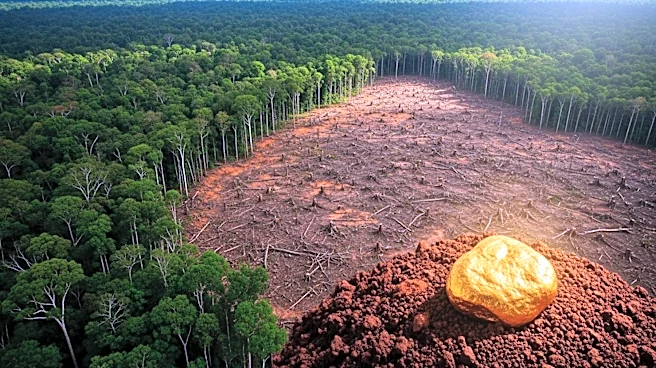
The state of Pará in the Brazilian Amazon has authorized Canadian mining company Belo Sun to clear nearly 600 hectares of rainforest for an open-pit gold mine. This decision, made on April 14 by Pará’s
environment secretariat, SEMAS, is being contested in court by federal agencies and prosecutors. They argue that the state lacks the authority to approve such a project along the Xingu River, which could affect several Indigenous territories. Indigenous groups, including the Juruna, Xikrin, Xipaia, Arara, and Parakanã peoples, have protested the project, citing inadequate consultation and potential irreversible harm to their way of life. Belo Sun plans to extract 6.3 metric tons of gold annually for 17 years and build a dam for mining waste. However, SEMAS has stipulated that the company must propose safer waste storage alternatives and is prohibited from withdrawing water from the Xingu River.
Why It's Important?
This development highlights the ongoing conflict between economic interests and Indigenous rights in the Amazon. The approval of the Belo Sun project could set a precedent for future mining operations in sensitive ecological and cultural areas. The potential environmental impact, including river contamination and ecosystem disruption, poses significant risks to the Indigenous communities who rely on these resources. The case underscores the tension between state and federal jurisdictions in Brazil, particularly concerning environmental and Indigenous affairs. The outcome of this legal challenge could influence future policies on resource extraction and Indigenous consultation processes.
What's Next?
The legal battle over the Belo Sun project is expected to continue, with federal agencies and Indigenous groups challenging the state’s decision in court. The outcome will likely depend on the interpretation of jurisdictional authority and the adequacy of the consultation process. If the project proceeds, Belo Sun will need to address the environmental concerns raised by SEMAS, including waste management and water sourcing. The situation may prompt further protests and advocacy from Indigenous and environmental groups, potentially influencing public opinion and policy decisions in Brazil.