







What's Happening?
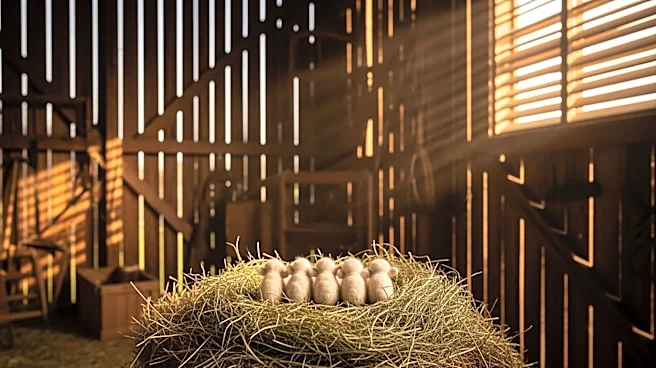
In Underhill, Vermont, a sheep at Clover & Bee Farm, owned by Anne and Gunnar O’Connor, gave birth to a rare set of sextuplets. This event is notable due to the rarity of such births, with estimates ranging from 1 in 1,000 to as rare as 1 in a million.
The ewe, named Teemu after Finnish hockey player Teemu Selänne, had previously given birth to quadruplets. Despite an initial veterinary check suggesting she would have twins, Anne O’Connor suspected more due to the ewe's size and early delivery. The lambs, partially of the Finnsheep breed, are all healthy and have been named in Finnish. The farm, which raises sheep for wool and grows herbs and berries, now has a total of 21 sheep, with more expected as five other ewes are pregnant.
Why It's Important?
This rare birth event highlights the unpredictability and challenges of livestock farming. For the O’Connors, it represents both an opportunity and a responsibility to ensure the health and well-being of the lambs. The event also underscores the importance of genetic diversity and breeding practices in agriculture. The successful birth and survival of the sextuplets could provide valuable insights into sheep breeding and management, potentially benefiting other farmers. Additionally, such unique occurrences can draw public interest and support for local farms, enhancing community engagement and awareness of agricultural practices.
What's Next?
The O’Connors plan to monitor the lambs closely to ensure they receive adequate nutrition, a critical factor in their early development. The farm intends to keep the female lambs and find homes for the males, which could involve collaboration with other local farmers or agricultural associations. As the farm prepares for more births, the O’Connors will likely continue to refine their breeding and management strategies. This event may also prompt further interest and research into the genetic factors contributing to multiple births in sheep, potentially influencing future breeding programs.