




What's Happening?
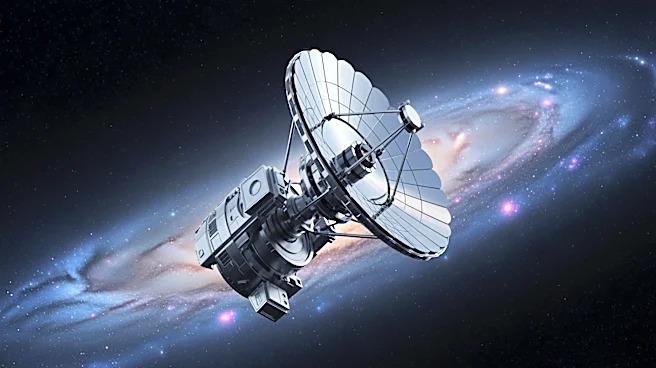
NASA's Voyager 1 and Voyager 2 probes, launched in 1977, continue to operate beyond the heliosphere using technology from the 1970s. These spacecraft, now in interstellar space, rely on minimal computing power and outdated programming languages. Despite
their limited capabilities, the probes have successfully explored major planets and crossed the Solar System's boundary. The mission faces challenges such as loss of institutional memory and the need for 'software archaeology' to maintain operations. Recent issues include a memory chip failure on Voyager 1, which required innovative problem-solving by NASA engineers.
Why It's Important?
The continued operation of the Voyager probes demonstrates the durability and ingenuity of early space exploration technology. It highlights the challenges of maintaining long-term missions with outdated systems, emphasizing the importance of engineering discipline and problem-solving. The mission's success provides valuable data on interstellar space and serves as a testament to human achievement in space exploration. It also underscores the need for preserving technical knowledge and documentation for future generations of engineers.
Beyond the Headlines
The Voyager mission illustrates the concept of 'software archaeology,' where modern engineers must interpret and maintain systems designed decades ago. This situation raises questions about the sustainability of long-term space missions and the preservation of technical expertise. The mission's challenges also reflect broader issues in technology management, such as the risks of losing institutional memory and the need for continuous knowledge transfer.