





What's Happening?
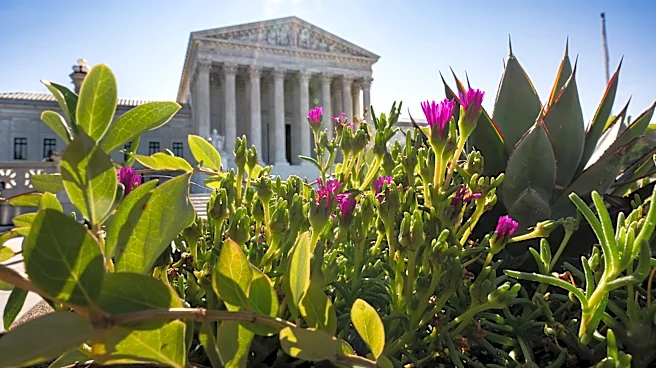
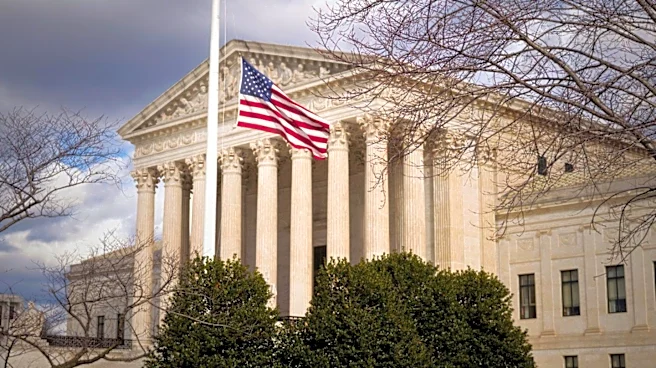
With the appointments of Neil M. Gorsuch and Brett M. Kavanaugh, the Supreme Court now has a conservative majority that could potentially vote to shield President Trump and accept his broad claims of executive immunity. This development could significantly
diminish the judicial branch's ability to check executive powers and conduct. The Supreme Court has agreed to hear President Trump’s appeal regarding a ruling by the 2nd Circuit Court of Appeals, which mandated his compliance with subpoenas for his personal and corporate tax records. During appellate court arguments, President Trump's lawyer, William Consovoy, asserted that President Trump possesses absolute immunity from criminal prosecution or investigation while serving as president, even in extreme hypothetical scenarios. This stance, coupled with the current composition of the Supreme Court, raises questions about the future balance of power among the branches of government.
Why It's Important?
The potential for the Supreme Court to endorse expansive claims of executive immunity has profound implications for the U.S. system of checks and balances. Such a ruling could weaken the judiciary's role in holding the executive branch accountable, a cornerstone of American democracy. This situation mirrors strategies employed by authoritarian leaders globally who seek to consolidate power by undermining independent institutions. If the Supreme Court were to accept President Trump's claims, it could set a precedent that significantly expands presidential power, making it more difficult to investigate or prosecute a sitting president for alleged misconduct. This shift could alter the fundamental structure of U.S. governance, potentially leading to a less accountable executive branch and a judiciary with diminished oversight capabilities. The outcome of this appeal will be a critical indicator of the future trajectory of presidential authority and judicial review in the United States.
What's Next?
The Supreme Court is scheduled to hear President Trump's appeal concerning the subpoenas for his tax records. The decision in this case will be closely watched, as it will clarify the extent of presidential immunity and the judiciary's power to compel information from the executive branch. Depending on the ruling, there could be significant reactions from political leaders, legal scholars, and civil society groups. A decision favoring broad executive immunity could lead to increased calls for legislative action to define and limit presidential powers, or it could embolden future presidents to assert similar claims. Conversely, a ruling that upholds the subpoenas could reinforce the judiciary's role as a check on executive power. The implications of this decision will likely extend beyond President Trump's current term, shaping the legal and political landscape for future presidencies.
Beyond the Headlines
The debate over executive immunity and the Supreme Court's role in checking presidential power touches upon deeper ethical and constitutional questions about the nature of American democracy. The source suggests that these developments align with tactics used by authoritarian leaders to centralize power by targeting independent courts, a free press, and civil society organizations. The potential for the Supreme Court to shield a president from investigation could be seen as a step towards an 'elected autocracy,' where democratic institutions are gradually eroded from within. This situation highlights the fragility of democratic norms and the importance of institutional checks and balances. The long-term shift could be a redefinition of presidential accountability, potentially leading to a more powerful executive branch with fewer constraints, challenging the traditional separation of powers envisioned by the U.S. Constitution.