








What's Happening?
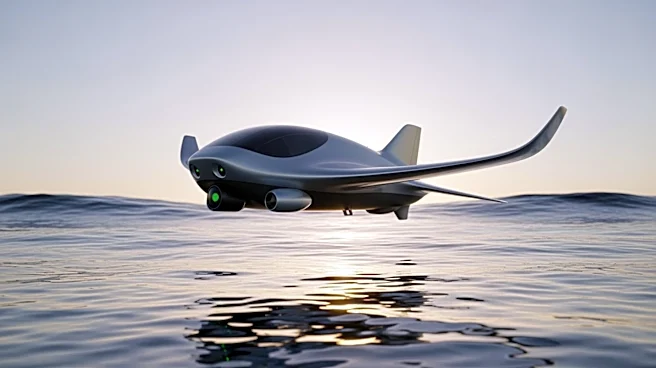
REGENT Craft has successfully completed the first ground-effect flight of its Squire seaglider drone, which is providing valuable insights for the development of its manned Viceroy craft. The Squire is an autonomous vessel utilizing wing-in-ground-effect
aerodynamics to travel over water, capable of taking off and landing on water surfaces. The defense variant can reach speeds of up to 160 knots, with a range of 1,400 nautical miles. The test marked the first use of REGENT's beyond visual line of sight (BVLOS) computer system, a critical step in advancing the craft's autonomy capabilities.
Why It's Important?
The successful testing of the Squire seaglider drone represents a significant advancement in autonomous maritime technology, with potential applications in both commercial and defense sectors. The development of the Viceroy prototype, informed by these tests, could lead to new capabilities in search and rescue operations, maritime surveillance, and transportation. The integration of electronic warfare payloads and sensors in future tests with the US Navy highlights the strategic military interest in such technologies, potentially influencing future defense procurement and operational strategies.
What's Next?
REGENT plans to participate in a military exercise in the summer, where the Squire and Viceroy will be tested with electronic warfare payloads and sensors. This will further evaluate the craft's capabilities and potential military applications. The US Coast Guard's approval of testing indicates regulatory support, which could expedite the development and deployment of these technologies. Successful demonstrations could lead to increased interest and investment in ground-effect vehicles, potentially transforming maritime operations.