





What's Happening?
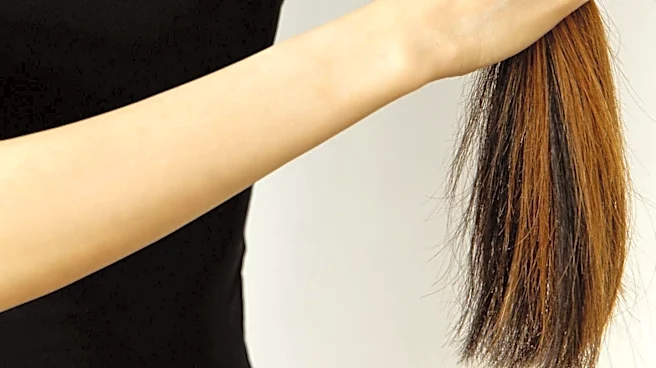
A study utilizing elemental analysis of human hair preserved in historical book covers has revealed that urban populations in early modern to modern Japan consumed diets significantly richer in minerals compared to contemporary diets. The research, published
in Nature, found elevated concentrations of elements such as chlorine (Cl), potassium (K), calcium (Ca), manganese (Mn), iron (Fe), copper (Cu), and lead (Pb) in historical hair samples. These findings were consistent across various locations, including Kyoto, Osaka, and Tokyo, despite the relatively simple diets dominated by C3 staples like rice and wheat, with marine fish as the primary nitrogen source. The study suggests that factors beyond dietary diversity, such as food processing, preservation, and preparation methods, as well as everyday material practices, played a crucial role in the higher mineral availability during these periods. For instance, high Cl levels are attributed to salt preservation techniques, while elevated Pb is linked to non-dietary exposure from cosmetics like white face powder.
Why It's Important?
This research offers a unique historical perspective on human nutrition and dietary evolution, challenging the assumption that diverse diets are solely responsible for mineral richness. It highlights how traditional food processing and preservation methods, such as salt preservation and the use of metal cookware, contributed significantly to mineral intake. The study also sheds light on non-dietary sources of elemental exposure, like lead in cosmetics, which had a notable impact on the health of past populations. For contemporary society, where mineral deficiencies remain a global public health concern, these findings underscore the importance of considering traditional practices and their influence on nutrient availability. Understanding these historical dietary patterns can inform modern nutritional strategies and public health initiatives, particularly in regions facing similar dietary challenges or seeking to re-evaluate traditional food systems for their nutritional benefits.
What's Next?
Future research will likely delve deeper into the specific mechanisms through which historical diets maintained high mineral availability. The study suggests that further analysis of historical rice samples could help clarify the distinction between direct fish consumption and the use of fish-derived fertilizers in contributing to mineral content. Expanding 'libraromic' approaches to other archived biological materials could also open new avenues for reconstructing interactions among diet, environment, and cultural practices across historical timescales. This could lead to a more comprehensive understanding of long-term dietary changes and their implications for human health. Additionally, the insights gained could inspire contemporary food science and public health efforts to explore traditional food preparation techniques for enhancing nutrient content in modern diets.
Beyond the Headlines
The study's methodology, using hair embedded in historical books, introduces a novel approach to bioarchaeological research, termed 'libraromics.' This technique offers a minimally destructive way to gather biochemical information from well-dated cultural objects, providing a rich source of data that is often inaccessible through conventional archaeological materials. This innovative use of cultural artifacts as 'bioarchives' could revolutionize our understanding of past human practices, environments, and diets, offering a unique window into the daily lives of historical populations. It also raises ethical considerations regarding the preservation and study of such artifacts, emphasizing their dual value as cultural heritage and scientific data sources. The findings also subtly critique the modern industrial food system, suggesting that while contemporary diets may be diverse, they might lack the inherent mineral richness found in simpler, traditionally processed diets.