
What's Happening?
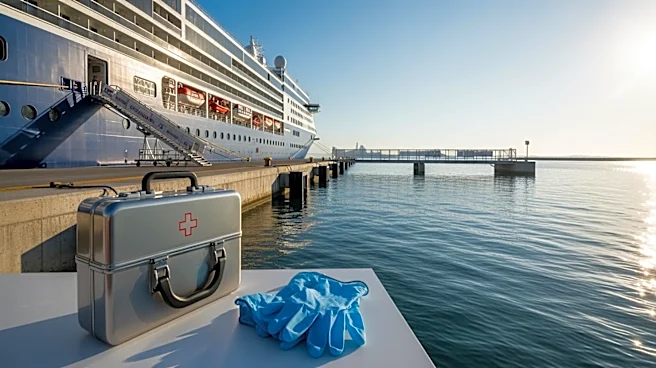
An outbreak of Andes hantavirus has been confirmed on the MV Hondius cruise ship, leading to three deaths and raising public concern about a potential pandemic. The World Health Organization (WHO) is coordinating
contact tracing and medical evacuations for those showing symptoms. Despite fears, experts emphasize that hantavirus is unlikely to become the next COVID-19, as it primarily spreads through contact with infected rodents and has limited human-to-human transmission. The outbreak's contained setting on the cruise ship allows for precise tracking of exposed individuals, aiding public health efforts.
Why It's Important?
The outbreak highlights the challenges of managing infectious diseases in confined environments like cruise ships, which can facilitate rapid transmission. It underscores the importance of effective public health responses and international cooperation in containing outbreaks. The situation also reflects the heightened public sensitivity to potential pandemics following COVID-19, emphasizing the need for clear communication from health authorities to prevent misinformation and panic. The response to this outbreak could inform future strategies for managing similar incidents and improving global health security.
What's Next?
The WHO will continue to monitor the situation and coordinate with affected countries to manage the outbreak. Public health officials will focus on contact tracing and monitoring exposed individuals for symptoms. The incident may prompt cruise lines to review and enhance their health and safety protocols to prevent future outbreaks. There could be increased research into hantavirus and its transmission dynamics to better understand and mitigate risks. The public's response to the outbreak may influence future health communication strategies to address concerns and misinformation effectively.