




What's Happening?
The Department of Homeland Security (DHS) has requested that the Supreme Court restore its immigrant verification system, known as the Systematic Alien Verification for Entitlements (SAVE) program, to check voters' citizenship for the upcoming November
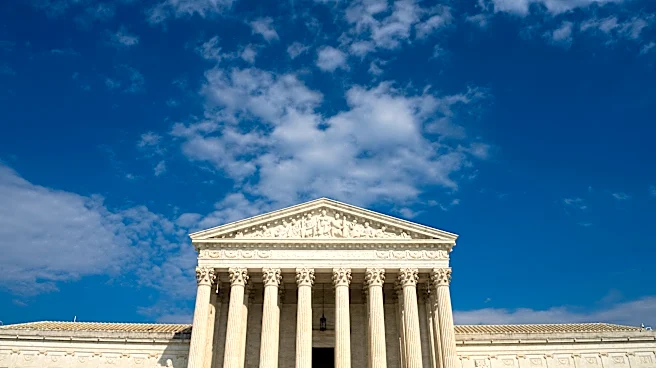
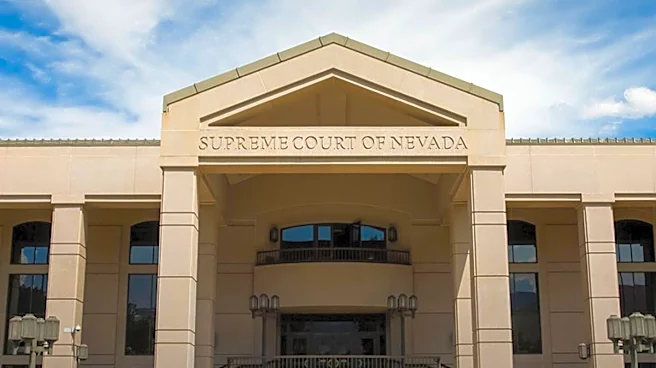
midterm elections. DHS made updates to SAVE following a directive from President Trump to ensure state election officials had appropriate access to the tool for verifying voter citizenship. These updates connected SAVE to Social Security records and enabled bulk queries, allowing the system to process over a million requests daily and enhance the efficiency of voter registration eligibility checks. However, a lower court judge found that these updates violated the Social Security Act and a federal privacy law, leading to a 2-1 ruling by the U.S. Court of Appeals for the District of Columbia Circuit to uphold a block on the updates. The Trump administration is now seeking emergency relief from the Supreme Court, arguing that the SAVE updates are legal and that the lower courts wrongly concluded the administration had forfeited its arguments. Solicitor General D. John Sauer asserted that the voting and privacy rights groups that initiated the lawsuit lacked the legal standing to challenge the overhaul. The request will be reviewed by Chief Justice John Roberts, who handles emergency matters from Washington, D.C., and has the option to refer the case to the full court for a vote.
Why It's Important?
This legal battle over the SAVE system has significant implications for the integrity and administration of U.S. elections, particularly concerning voter registration and citizenship verification. The Trump administration's push to restore the updated SAVE system underscores a broader effort to enhance election security by ensuring that only eligible citizens participate in voting. If the Supreme Court grants the DHS's request, it could significantly alter how states verify voter eligibility, potentially streamlining the process but also raising concerns about privacy and access to voting. Conversely, if the block remains in place, it would uphold the lower courts' interpretation of federal privacy laws and the Social Security Act, potentially maintaining existing verification methods that some argue are less efficient. The outcome will impact state election officials, who rely on such systems to manage voter rolls, and civil liberties groups, who advocate for protecting voting rights and personal data. Democracy Forward CEO Skye Perryman, representing the plaintiffs, stated that "the integrity of our elections are on the line," emphasizing concerns that the system could jeopardize Americans' privacy and fundamental freedom to vote. The decision will set a precedent for the balance between election security measures and individual rights, influencing future policies on voter verification and data sharing between federal agencies.
What's Next?
Chief Justice John Roberts will review the Department of Homeland Security's request for emergency relief. He has the authority to make a decision independently or refer the case to the full Supreme Court for a vote. A swift decision is anticipated given the proximity of the November midterm elections. If the Supreme Court sides with the DHS, the updated SAVE system could be reinstated, allowing states to use its enhanced capabilities for voter citizenship verification. This would likely lead to a more efficient, albeit potentially controversial, process for checking voter eligibility. Conversely, if the Supreme Court upholds the lower court's block, the DHS would be required to revert to an older, potentially less efficient version of the SAVE system, or explore alternative methods for voter verification. Regardless of the immediate outcome, the legal challenge highlights ongoing debates about election security, voter access, and the role of federal agencies in state election processes. The decision will likely draw significant attention from political leaders, civil rights organizations, and election administrators, shaping future legislative and judicial actions related to election integrity.
Beyond the Headlines
The legal dispute over the SAVE system delves into the complex interplay between national security, individual privacy, and the fundamental right to vote. The Trump administration's efforts to leverage federal databases for voter verification reflect a broader trend of increasing data integration across government agencies, raising ethical and legal questions about data ownership, access, and potential misuse. The concerns voiced by civil liberties groups about the system's impact on privacy and voting rights underscore the delicate balance that must be struck between ensuring election integrity and protecting citizens' constitutional freedoms. The case also highlights the ongoing partisan divide over election administration, with different interpretations of what constitutes secure and fair elections. The Supreme Court's decision will not only determine the immediate fate of the SAVE system but also contribute to the evolving legal framework governing voter verification in the digital age. This could lead to long-term shifts in how states manage voter registration, potentially influencing voter turnout, the accuracy of voter rolls, and public trust in electoral processes. The broader implications extend to how technology and data analytics are employed in civic processes, prompting a reevaluation of existing laws and regulations to adapt to new capabilities while safeguarding individual liberties.