






What's Happening?
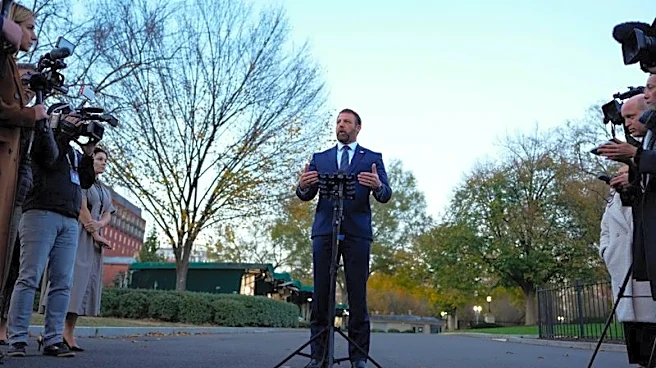
Recent widespread tech outages affecting major entities such as Microsoft Outlook, the Federal Aviation Administration, United Airlines, and JP Morgan Chase have occurred around the same time. Despite public concern, experts, including former Cybersecurity
and Infrastructure Security Agency director Chris Krebs, state there is no evidence to suggest these outages are connected, coordinated, or the result of cyberattacks. Instead, Krebs attributes the incidents to advancements in artificial intelligence, specifically AI-assisted vulnerability detection and subsequent patching efforts. He explains that AI is becoming more effective at identifying system vulnerabilities, leading to a rapid increase in necessary patches. The challenge lies in the speed and scale at which these patches are implemented by human teams, which may not keep pace with the rate of vulnerability discovery, occasionally leading to system destabilization and temporary outages.
Why It's Important?
These recent outages, while not malicious, highlight the increasing fragility of digitally interconnected U.S. infrastructure and services. The reliance on AI for vulnerability detection signifies a double-edged sword: while it enhances security by finding flaws faster, it also introduces a new layer of complexity in system maintenance and stability. For U.S. businesses and consumers, even temporary disruptions to critical services like air travel, banking, and communication can cause significant economic impact and inconvenience. The situation underscores the need for organizations to improve their patching and update processes to match the accelerated pace of AI-driven vulnerability discovery. It also emphasizes the ongoing challenge of maintaining robust digital infrastructure in an era of rapid technological advancement, affecting national security, economic stability, and public trust in digital systems.
What's Next?
Experts anticipate that more outages of this nature are likely to occur as AI-assisted tools continue to discover vulnerabilities at an accelerated rate. Organizations will face ongoing pressure to adapt their patching and system update protocols to minimize disruptions. This will likely involve significant investments in IT infrastructure, automation, and skilled personnel to manage the increased volume and complexity of security patches. There will also be a continued focus on developing more resilient systems that can withstand the temporary destabilization caused by updates. Furthermore, the cybersecurity community will need to address the potential for malicious actors to leverage AI to find vulnerabilities, necessitating a continuous arms race in defensive and offensive AI capabilities.
Beyond the Headlines
The phenomenon of AI-driven vulnerability discovery and subsequent patching-related outages points to a deeper systemic shift in cybersecurity. It suggests that the 'good guys' are becoming more effective at identifying flaws, but the sheer volume of these flaws, coupled with the inherent risks of patching live systems, creates a new class of operational challenges. This could lead to a re-evaluation of software development lifecycles, emphasizing 'security by design' and more robust testing methodologies before deployment. Ethically, the increasing reliance on AI for critical infrastructure maintenance raises questions about accountability when systems fail due to automated processes. Culturally, these frequent, albeit temporary, outages may erode public confidence in digital reliability, pushing for greater transparency from tech companies about their maintenance practices and the role of AI in system stability.