
What's Happening?
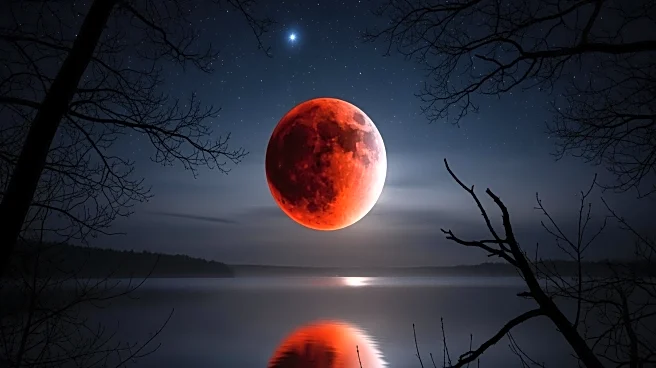
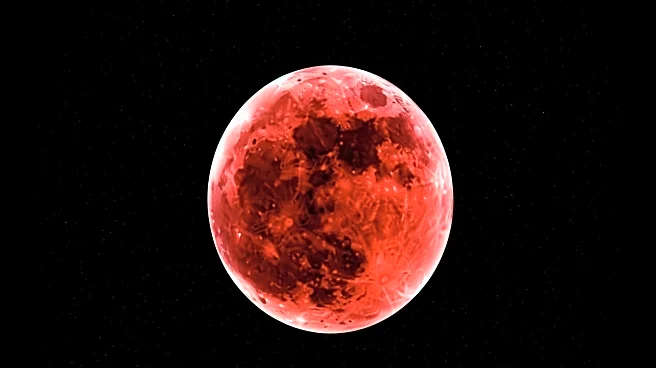
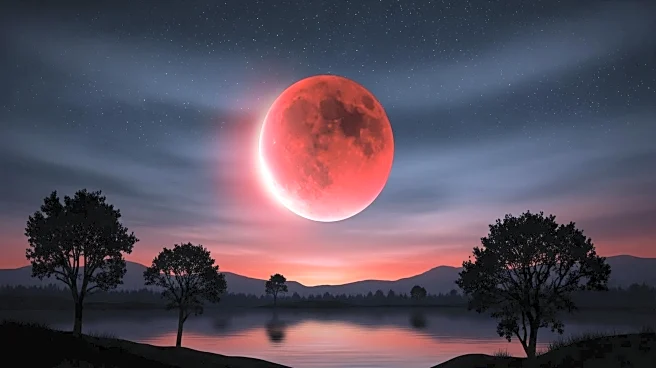
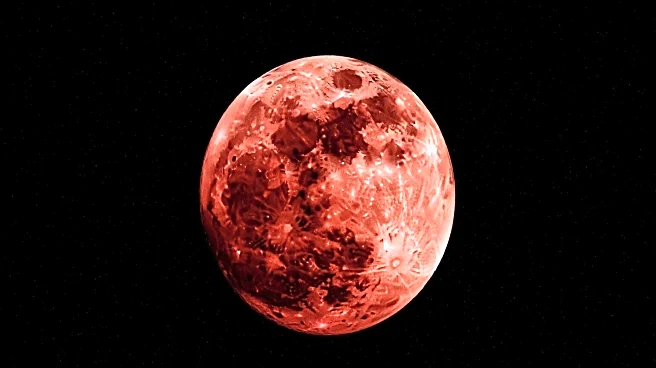
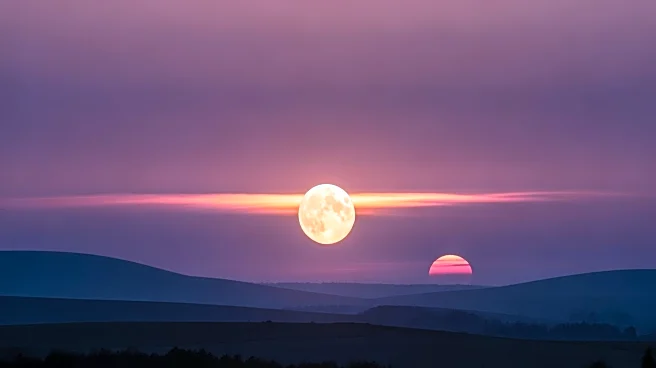
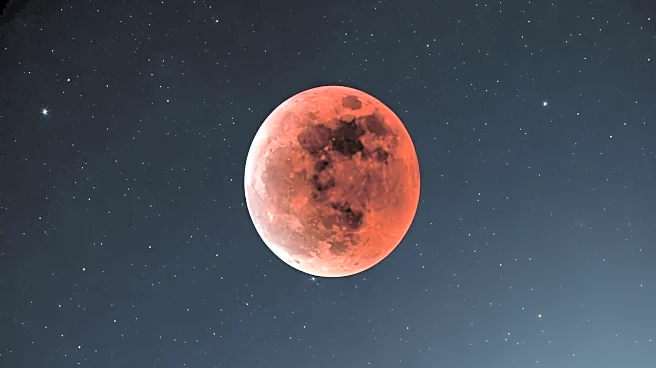
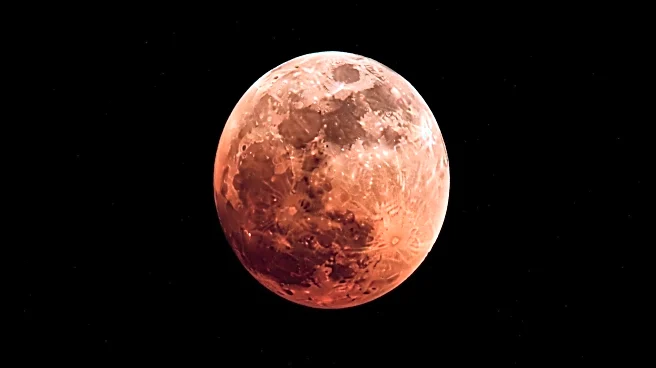
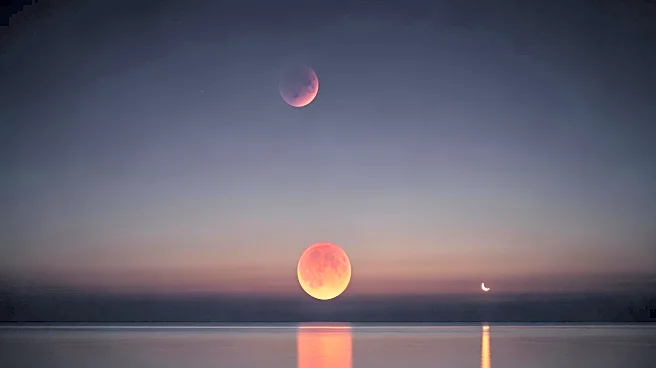
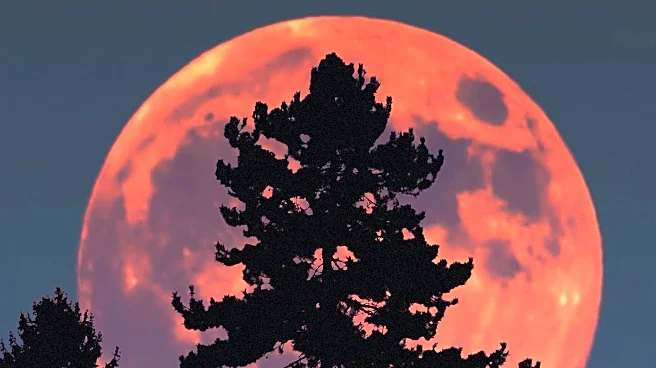
A total lunar eclipse is set to occur in the early morning hours of March 3, turning the moon a reddish orange hue, commonly referred to as a 'blood moon.' During this event, Earth will be positioned between the moon and the sun, casting its shadow on the moon's
surface. This eclipse will be visible from half of Earth, including the United States. In North America, the partial eclipse will begin around 4 a.m. ET, with totality starting just after 6 a.m. ET and lasting for approximately an hour. The phenomenon offers a striking visual experience and an opportunity for photography enthusiasts to capture the event.
Why It's Important?
Lunar eclipses provide a unique opportunity for both amateur and professional astronomers to observe and study celestial mechanics. The visibility of this eclipse across the United States allows a wide audience to engage with the event, fostering interest in astronomy and science. For photographers, capturing the blood moon presents a challenge and an opportunity to experiment with different techniques and equipment. The event also serves as a reminder of the intricate dance of celestial bodies and the predictable nature of astronomical phenomena.
What's Next?
As the eclipse approaches, individuals interested in photographing the event are advised to prepare their equipment and familiarize themselves with techniques for capturing the moon. Using a tripod, adjusting camera settings for daylight conditions, and experimenting with smartphone features like night mode can enhance photo quality. For those unable to capture the perfect shot, professional photographers will likely share high-quality images online. The next total lunar eclipse visible from the U.S. will provide another opportunity for observation and photography.