

What's Happening?
Windward, a maritime AI company, has identified 278 Iranian-linked ships using fraudulent ship registries across 23 different flags between August 6 and November 5. This represents an expansion of Iran's strategy to evade international sanctions, moving
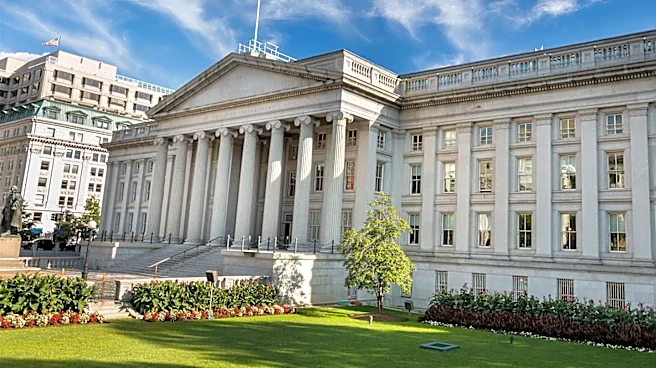
beyond tankers to include other vessel types over the past 18 months. Nicaragua is the most frequently used fraudulent registry, accounting for 53 ships, followed by Anguilla with 39. The majority of these vessels, 68%, are tankers, with 171 of them already sanctioned. The average age of these ships is 26 years. The U.S. Treasury Department's Office of Foreign Assets Control (OFAC) issued an alert on November 4, highlighting the increasing reliance on false flags by vessel owners and operators to evade U.S. sanctions, particularly those involved in trading Iranian-origin petroleum or petrochemicals. OFAC also targeted a network, primarily based in Chandigarh, India, for allegedly selling these fraudulent flags to Iranian ships.
Why It's Important?
This development has significant implications for global maritime security and the effectiveness of international sanctions regimes. The use of fraudulent registries allows Iran to obscure the ownership and origin of its vessels and cargo, making it harder to enforce sanctions aimed at curbing its nuclear program and other illicit activities. This practice undermines efforts by the U.S. and its allies to pressure Iran economically. For U.S. industries, particularly those involved in shipping, insurance, and finance, this poses increased compliance risks and potential exposure to illicit trade. Companies must enhance their due diligence to avoid inadvertently facilitating sanctioned activities. The targeting of the India-based network by OFAC also underscores the U.S. government's commitment to disrupting the infrastructure that supports sanctions evasion, potentially leading to further investigations and enforcement actions against entities globally that aid such schemes.
What's Next?
The OFAC alert and subsequent actions indicate a continued focus by the U.S. government on combating sanctions evasion through maritime activities. Businesses and financial institutions involved in maritime trade are likely to face increased scrutiny and pressure to implement more robust compliance measures. This could include enhanced monitoring of vessel registries, ownership structures, and shipping routes. Further sanctions may be imposed on individuals and entities found to be facilitating these fraudulent activities. The expansion of Iran's use of fraudulent registries to various vessel types suggests a more sophisticated and adaptive approach to sanctions evasion, which will require continuous vigilance and evolving countermeasures from international bodies and national governments. The international community will likely need to collaborate more closely to identify and close loopholes in maritime governance that enable such practices.
Beyond the Headlines
The proliferation of fraudulent ship registries highlights a broader challenge in global governance: the ease with which state and non-state actors can exploit gaps in international regulations for illicit purposes. This issue extends beyond sanctions evasion to concerns about illegal fishing, human trafficking, and environmental violations, as false flags can provide anonymity for a range of illegal activities. The average age of the vessels involved, 26 years, also raises concerns about maritime safety and environmental standards, as older ships may be less compliant with modern regulations. This situation underscores the need for a more unified and transparent global system for ship registration and tracking. The ethical implications for countries whose registries are exploited, even unknowingly, are also significant, potentially damaging their international reputation and leading to diplomatic tensions. The ongoing cat-and-mouse game between sanctioning bodies and those seeking to evade them points to a persistent need for innovation in enforcement and intelligence gathering.