



What's Happening?
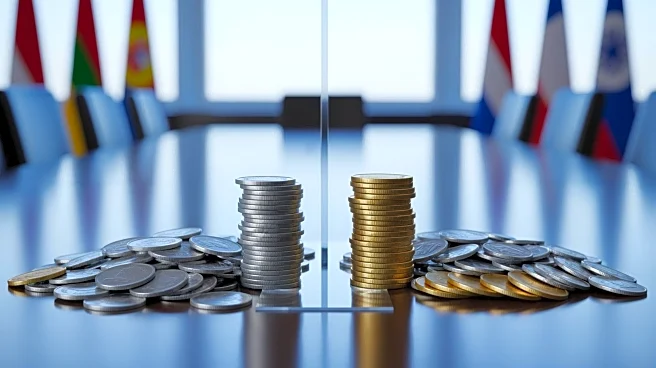
European Union leaders are convening to discuss the potential use of €210 billion in frozen Russian assets to fund a loan for Ukraine. This meeting, part of the European Council summit, is crucial as Ukraine faces a financial shortfall in the first half
of the upcoming year. The assets, primarily held by Euroclear in Belgium, have become a point of contention among EU members. While some countries, including Belgium, express concerns over legal implications, others advocate for utilizing these funds to support Ukraine. The summit represents a critical juncture for the EU, as previous attempts to reach a consensus have failed. The decision will determine whether the EU can provide the necessary financial backing to Ukraine, which is essential for its economic stability and ongoing conflict with Russia.
Why It's Important?
The outcome of this summit holds significant implications for EU unity and its geopolitical stance. A decision to use the frozen assets could set a precedent for international financial policies regarding sanctioned funds. It also reflects the EU's commitment to supporting Ukraine amidst its conflict with Russia. However, internal divisions, particularly from Hungary and Slovakia, highlight the challenges of achieving a unified EU foreign policy. The decision could influence EU relations with the U.S., especially given recent tensions over differing approaches to the Ukraine conflict. The EU's ability to act decisively will impact its credibility and influence on the global stage, particularly in its dealings with Russia and support for Ukraine.
What's Next?
If EU leaders fail to reach an agreement on using the frozen assets, they will need to explore alternative funding mechanisms to support Ukraine. This could involve increased EU borrowing or other financial arrangements. The summit's outcome will also affect upcoming negotiations between U.S. and Russian officials, as the EU's stance could influence broader international diplomatic efforts. Additionally, Ukrainian President Volodymyr Zelenskyy's participation in the summit underscores the importance of EU support for Ukraine's security and economic stability. The EU's decision will likely shape future discussions on security guarantees for Ukraine and its potential integration into Western alliances.