


What's Happening?
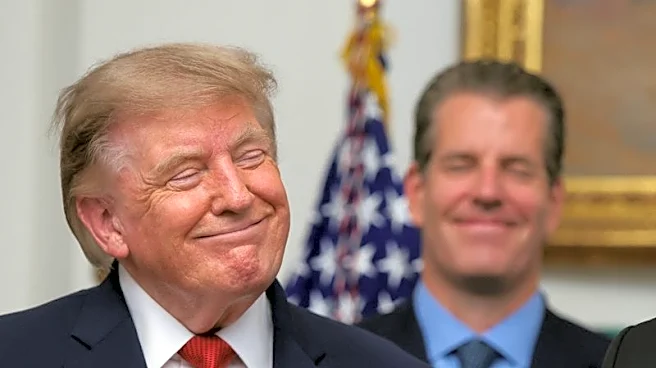
President Trump's family-backed crypto firm, World Liberty Financial, has received preliminary approval to operate as a bank from a regulator appointed by the President. This development has drawn criticism, with Senator Elizabeth Warren stating that
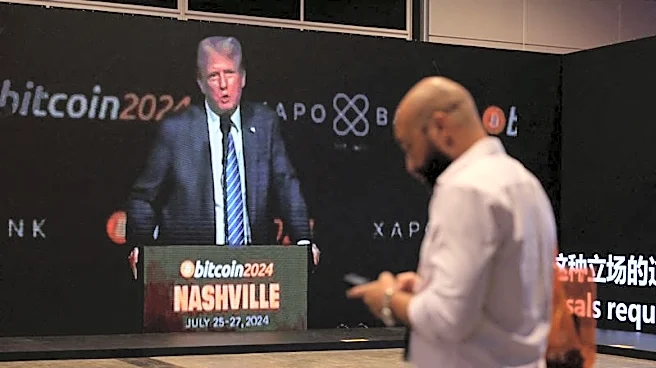
President Trump is the first president to approve, operate, and supervise his own bank, calling it a brazen act of self-dealing. The Trump family owns 38% of World Liberty Financial, while an investment firm in the United Arab Emirates owns nearly half. Despite this, the Trump family reportedly collects 75% of all crypto revenues from the company. President Trump had previously expressed skepticism about cryptocurrencies, calling Bitcoin a scam and a potential threat to the U.S. dollar, but reversed his stance during his 2024 presidential campaign after recognizing the potential for profit and significant corporate donations from the industry. In January 2025, he launched a meme cryptocurrency, $TRUMP, which generated hundreds of millions of dollars, and collected nearly $800 million in 2025 from World Liberty's digital token sales.
Why It's Important?
This situation is significant due to the unprecedented nature of a sitting U.S. President having direct financial ties to a bank he has effectively approved. It raises serious questions about conflicts of interest and the potential for the presidency to be used for personal enrichment, setting a new precedent in U.S. political culture. The approval of World Liberty Financial as a bank, despite its non-traditional structure and the speculative nature of digital tokens, could legitimize institutional graft. The company's primary function is expected to be issuing and managing its own stablecoins, USD1, rather than traditional banking services. This move could facilitate foreign political interference, as corporate entities or governments might route large sums of money through World Liberty digital tokens to gain access to the Trump administration, especially given the hands-off approach of U.S. federal regulators to crypto oversight. The lack of widespread public pushback also indicates a significant shift in the U.S. political landscape regarding accountability for executive actions.
What's Next?
The preliminary approval of World Liberty Financial as a bank is likely to intensify scrutiny and debate regarding the ethical boundaries of presidential conduct and financial dealings. Congress may face pressure to address the perceived conflict of interest, potentially through legislative action or investigations, as suggested by Senator Warren's call for Congress not to allow it to stand. The long-term implications for the U.S. financial system and regulatory framework for cryptocurrencies are also uncertain, as this development could prompt a reevaluation of existing oversight mechanisms. The public's reaction and the media's continued coverage will play a crucial role in shaping the discourse around this issue. Furthermore, the operational model of World Liberty Financial, focusing on stablecoins and digital tokens, will be closely watched for its impact on the broader cryptocurrency market and its potential to influence financial transactions and international relations.
Beyond the Headlines
This event delves into deeper implications concerning the erosion of traditional ethical standards in U.S. politics and the potential for a 'monetization of the presidency.' The shift in President Trump's stance on cryptocurrencies, from skepticism to active involvement, highlights a transactional approach to policy and personal gain. The case also underscores the vulnerability of democratic institutions when checks and balances are perceived to be weakened or circumvented. The concept of 'repartijas' in other democracies, where political actors subordinate judicial independence for their own interests, provides a comparative lens through which to view the potential for similar dynamics in the U.S. context. The reliance on public outcry and media attention as a safeguard against such actions, as seen in other nations, suggests a growing importance of civil society and independent journalism in maintaining democratic integrity. The broader cultural shift towards accepting such financial entanglements by high-ranking officials could have lasting effects on public trust in government and the integrity of financial markets.