






What's Happening?
The prospects for meaningful negotiations between the United States and Iran remain low as the Islamic Revolutionary Guards Corps (IRGC) continues to dominate Iran's decision-making, opposing compromise. Iranian Foreign Affairs Minister Abbas Araghchi
met with senior Pakistani officials in Islamabad to convey Iran's observations on ending the war. However, no direct meeting between the U.S. and Iran was scheduled, and Iran insisted on conveying its positions through Pakistan. President Trump canceled the planned trip of U.S. Special Envoy Steve Witkoff and Jared Kushner to Islamabad due to Iran's unchanged negotiating positions. Trump cited the lack of progress and internal regime infighting in Iran as reasons for the cancellation.
Why It's Important?
The ongoing tensions between the U.S. and Iran have significant implications for international diplomacy and regional stability. The IRGC's control over Iran's decision-making process limits the potential for compromise, affecting the possibility of easing tensions. The cancellation of the U.S. envoy trip underscores the challenges in diplomatic engagement and the complexities of negotiating with a divided Iranian leadership. This situation impacts U.S. foreign policy and its approach to Middle Eastern geopolitics, potentially affecting global oil markets and international relations.
What's Next?
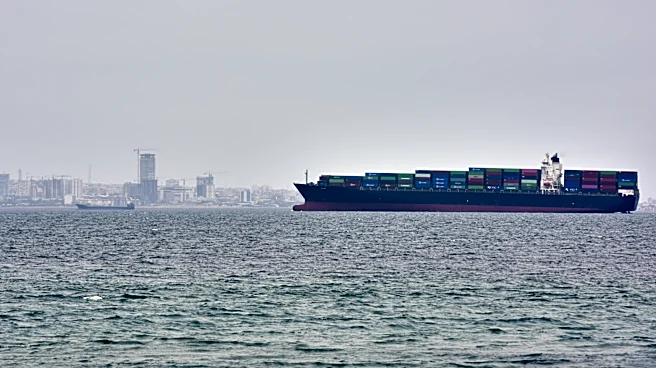
The U.S. is likely to continue enforcing its blockade on Iranian ports, as indicated by recent actions by U.S. Central Command. The lack of direct negotiations suggests that diplomatic efforts will remain stalled unless there is a shift in Iran's negotiating stance. The international community may need to explore alternative diplomatic channels or mediators to facilitate dialogue. The situation remains fluid, with potential for further escalation or diplomatic breakthroughs depending on future developments.