
What's Happening?
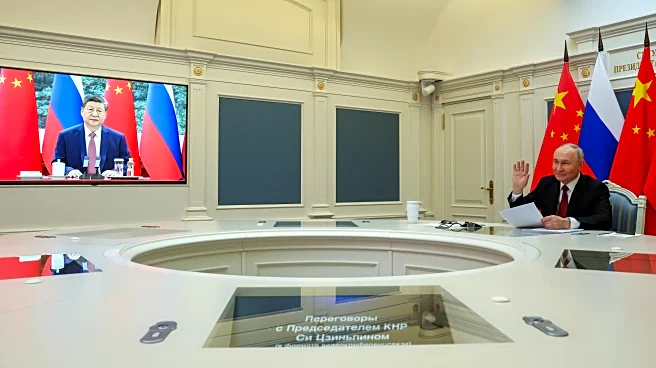
The new chief of MI6, Blaise Metreweli, is set to deliver her first public speech, highlighting the acute threat posed by Russia. Metreweli, who took over as head of the Secret Intelligence Service in the autumn, will emphasize the aggressive and expansionist
nature of Russia under President Vladimir Putin. Her speech will address the hybrid warfare tactics employed by Russia, including cyber attacks and the use of drones near critical infrastructure. The speech will also touch on recent sanctions against Russian entities and two China-based companies for their cyber activities against the UK and its allies. Metreweli's background in MI6's Q Branch, known for its technological innovations, underscores her focus on mastering technology in intelligence operations.
Why It's Important?
The warning from MI6's new chief underscores the ongoing geopolitical tensions involving Russia, particularly in the context of the war in Ukraine. The emphasis on hybrid warfare and cyber threats highlights the evolving nature of global security challenges. This development is significant for the U.S. and its allies, as it underscores the need for enhanced cybersecurity measures and international cooperation to counteract these threats. The focus on technology within intelligence agencies reflects a broader trend towards digital resilience in national security strategies. The speech also aligns with broader calls for a 'whole of society approach' to national resilience, emphasizing the role of various sectors, including industry and education, in bolstering defense capabilities.
What's Next?
Following Metreweli's speech, there may be increased collaboration between the UK and its allies, including the U.S., to address the threats posed by Russia and other state actors. The emphasis on technology suggests potential investments in cybersecurity and intelligence capabilities. Additionally, the call for a 'whole of society approach' may lead to policy discussions on national service and defense education, as seen in recent proposals by France and Germany. The U.S. may also consider similar strategies to enhance its national resilience against growing global threats.
Beyond the Headlines
The focus on technology in Metreweli's speech highlights the shifting landscape of espionage and intelligence operations. As biometric scanning and digital surveillance become more prevalent, traditional espionage tactics are being challenged. This shift necessitates a reevaluation of intelligence training and operations, with a greater emphasis on digital skills and cybersecurity. The broader implications of this development include potential changes in international relations and defense policies, as countries adapt to new security paradigms.