
What's Happening?
The European Union (EU) has announced a significant investment in defense research and technology, earmarking €1 billion for the European Defense Fund (EDF) to support various projects, including the development
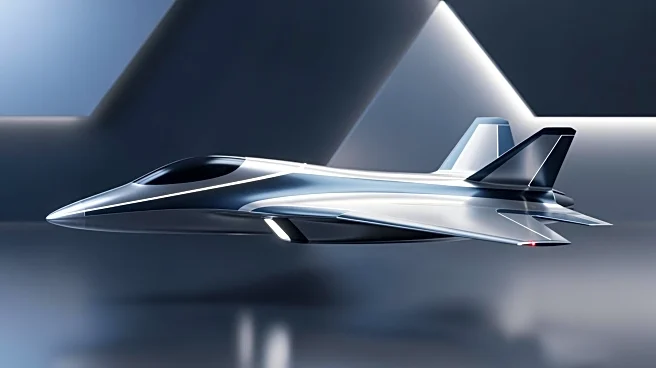
of small turbofan engines for collaborative combat aircraft (CCAs) and a multirole light attack aircraft. Among the 31 topics in the 2026 call for proposals, the EDF will fund research into turbofan engines capable of operating at speeds up to Mach 0.95, with a focus on cost-effectiveness and maintainability. Additionally, the fund will support autonomous aerial refueling technologies and the development of a Future Multirole Light Aircraft (FMLA) for light attack and reconnaissance missions. The initiative also includes studies on integrating European weapons with Galileo navigation satellite receivers and enhancing self-protection suites for aircraft.
Why It's Important?
This investment by the EU signifies a strategic move to bolster European defense capabilities and reduce reliance on non-European technologies. By funding the development of CCAs and FMLAs, the EU aims to enhance its military readiness and technological independence. The focus on autonomous refueling and advanced radar systems reflects a broader trend towards automation and improved early warning capabilities, which are crucial for maintaining security in an increasingly complex global threat environment. The integration of Galileo navigation systems offers an alternative to the U.S. GPS, potentially increasing the EU's strategic autonomy. These developments could have significant implications for the defense industry, potentially leading to new partnerships and innovations.
What's Next?
The next steps involve the selection of project teams and the commencement of research and development activities. The EDF will oversee the allocation of funds and monitor progress to ensure that the projects meet their objectives. The development of the High-End Endo-Atmospheric Interception (EATMI) project will also proceed, with one of the two existing project teams being selected to advance to the next phase. As these projects progress, they may attract interest from defense contractors and technology firms, potentially leading to collaborations and further investments in European defense capabilities.