




What's Happening?
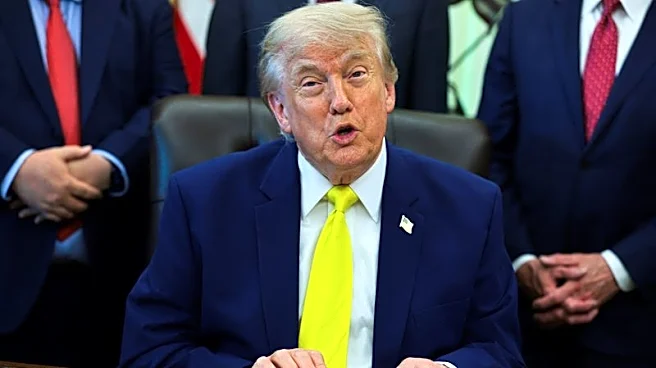
In a recent interview on NBC's 'Meet the Press,' President Trump addressed concerns regarding his campaign promise of 'No new wars' amidst the ongoing conflict with Iran. Trump clarified that he never guaranteed the absence of war if re-elected, emphasizing
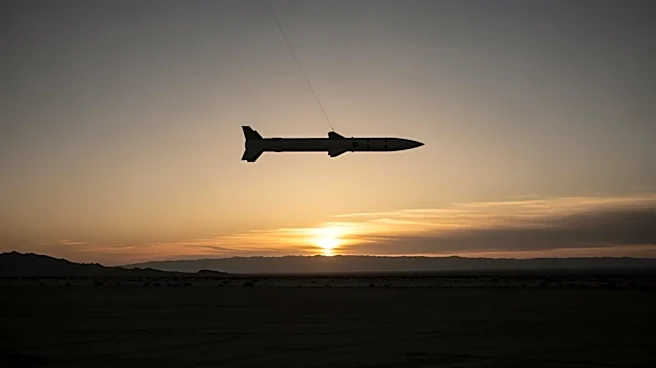
the necessity of a strong military. The interview aired shortly before a series of retaliatory strikes between Israel and Iran, marking the first such exchange since an April ceasefire. Trump also defended a now-abandoned $1.8 billion fund intended to compensate his allies and reiterated unsubstantiated claims of election fraud in California's recent primary. The interview concluded abruptly as Trump expressed frustration with the questioning.
Why It's Important?
The ongoing conflict with Iran and President Trump's statements highlight significant implications for U.S. foreign policy and military strategy. Trump's remarks suggest a potential shift in his administration's approach to international conflicts, which could impact global diplomatic relations and U.S. military engagements. The situation also underscores the complexities of campaign promises versus governance realities, particularly in foreign policy. Additionally, Trump's unproven claims of election fraud in California could influence public trust in the electoral process and fuel partisan tensions. These developments are crucial for understanding the current political landscape and its potential effects on future U.S. policies.
What's Next?
The continuation of hostilities between Israel and Iran may lead to further military engagements, potentially involving the U.S. and affecting regional stability. President Trump's stance on military strength and his handling of the Iran conflict will likely be scrutinized by political opponents and international observers. Domestically, the fallout from Trump's election fraud claims could lead to increased investigations and debates over election integrity. The political discourse surrounding these issues may shape upcoming legislative and electoral agendas, influencing both domestic and foreign policy decisions.