








What's Happening?
The United States has deported nearly 2,300 Mexican citizens to Guatemala and dozens more to Honduras this year, marking a significant shift in deportation practices under the Trump administration. Historically, Mexicans deported from the U.S. were almost
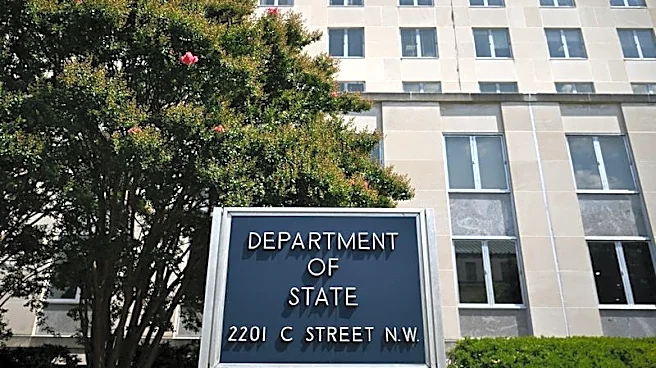
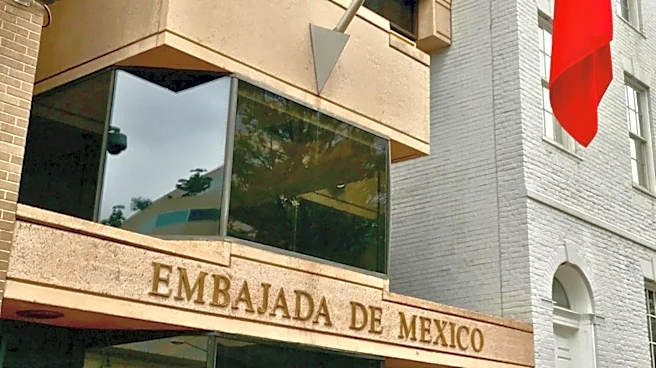
exclusively returned directly to Mexico. This new approach involves sending Mexican deportees to Central American countries as a 'transit stopover' before they are transported by bus to southern Mexico. Guatemalan President Bernardo Arévalo confirmed that 2,284 Mexicans have arrived in Guatemala as part of an 'arrangement' with the Mexican government, with costs covered by Mexico or U.S. funding. The U.S. Department of Homeland Security stated that the administration is 'utilizing all lawful options to carry out the largest deportation operation in history, just as President Trump promised.' The Mexican Foreign Ministry has expressed opposition to this practice, reiterating that Mexican citizens have the right to enter their own country and is coordinating with involved nations for their safe return.
Why It's Important?
This change in U.S. deportation policy has significant implications for U.S.-Mexico relations and immigration enforcement. The practice of deporting Mexican citizens to third countries, rather than directly to Mexico, is seen by some civil organizations as a tactic to increase pressure on the Mexican government. This comes at a time when Mexico has protested the deaths of 17 Mexican citizens in U.S. immigration custody or during enforcement operations, and President Trump has expanded agreements with Latin American countries for joint operations against criminal groups. Immigration lawyers suggest that the Trump administration may be using third-country deportations as a legal loophole to indirectly force asylum seekers back to Mexico, circumventing court orders that recognize dangers in returning them directly. This policy could also endanger migrants who may have sought asylum in the U.S. or lack resources in an unfamiliar country, raising humanitarian concerns.
What's Next?
The Mexican government is expected to continue its diplomatic efforts to oppose the third-country deportation practice and ensure the safe return of its citizens. Coordination with Guatemala and Honduras will be crucial for managing the transit and repatriation of these individuals. Civil organizations and human rights groups will likely intensify their monitoring and advocacy efforts, potentially challenging the legality and humanitarian implications of these deportations. The U.S. Department of Homeland Security is anticipated to continue its current enforcement strategy, aiming to fulfill President Trump's promise of a large-scale deportation operation. The long-term impact on U.S.-Mexico immigration agreements and regional cooperation on border security remains to be seen, as the policy could strain diplomatic relations while potentially deterring future border crossings.
Beyond the Headlines
The shift to third-country deportations for Mexican citizens highlights a broader trend in U.S. immigration policy under the Trump administration: the externalization of border enforcement. By involving Central American nations in the deportation process, the U.S. is effectively extending its border control beyond its physical boundaries. This strategy raises complex legal and ethical questions regarding international obligations to asylum seekers and the sovereignty of nations to receive their own citizens. The policy also underscores the increasing securitization of migration, where humanitarian concerns may be overshadowed by national security and enforcement priorities. The potential for increased vulnerability among deported individuals, who may be left in unfamiliar territories without adequate support, presents a significant human rights challenge and could lead to further instability in the region.