
What's Happening?
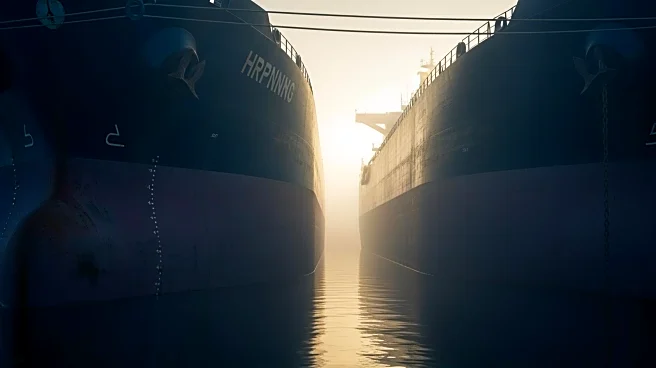
The United States has seized two oil tankers, the Marinera and the M/T Sophia, linked to Venezuela's 'shadow fleet' as part of efforts to enforce sanctions on Venezuelan oil exports. The Marinera, previously
known as the Bella 1, was intercepted in the North Atlantic with assistance from UK forces, while the M/T Sophia was seized in the Caribbean. These vessels are accused of engaging in illicit activities, including transporting sanctioned oil. The US military and Coast Guard have been actively blocking vessels involved in illegal oil transport from Venezuela. The Marinera, which had been sanctioned by the US since 2024, was reportedly involved in activities linked to Russia and Iran, and had moved significant quantities of oil on behalf of Iran. The US operation is part of a broader strategy to curb the use of shadow fleets by countries like Venezuela, Iran, and Russia to circumvent international sanctions.
Why It's Important?
The seizure of these tankers underscores the US's commitment to enforcing sanctions against Venezuela and its allies, aiming to disrupt illegal oil trade that funds activities deemed threatening to global stability. This action highlights the ongoing geopolitical tensions involving the US, Venezuela, Russia, and Iran. The use of shadow fleets to evade sanctions poses significant challenges to international maritime law and global oil markets. By targeting these vessels, the US seeks to cut off financial resources that could be used to support terrorism and other destabilizing activities. The involvement of UK forces also indicates a coordinated international effort to address these issues, reflecting broader concerns about the implications of such illicit trade on global security and economic stability.
What's Next?
The US is likely to continue its aggressive stance against shadow fleets, potentially leading to further seizures and increased maritime enforcement. This could provoke diplomatic tensions, particularly with Russia, which has condemned the seizure of the Russian-flagged Marinera and demanded the safe return of its crew. The situation may also prompt Venezuela and its allies to seek alternative methods to bypass sanctions, potentially escalating the use of shadow fleets. The international community, including organizations like the United Nations, may need to address the legal and regulatory challenges posed by these developments to ensure compliance with international maritime laws.
Beyond the Headlines
The use of shadow fleets raises ethical and legal questions about the enforcement of international sanctions and the sovereignty of nations over their registered vessels. The practice of reflagging ships and using false flags to avoid detection complicates efforts to maintain transparency and accountability in global trade. This situation also highlights the broader issue of how countries like Venezuela, Iran, and Russia navigate international sanctions, potentially leading to shifts in global alliances and trade practices. The long-term impact on the global oil market and international relations remains uncertain, as countries may need to reassess their strategies in response to these enforcement actions.